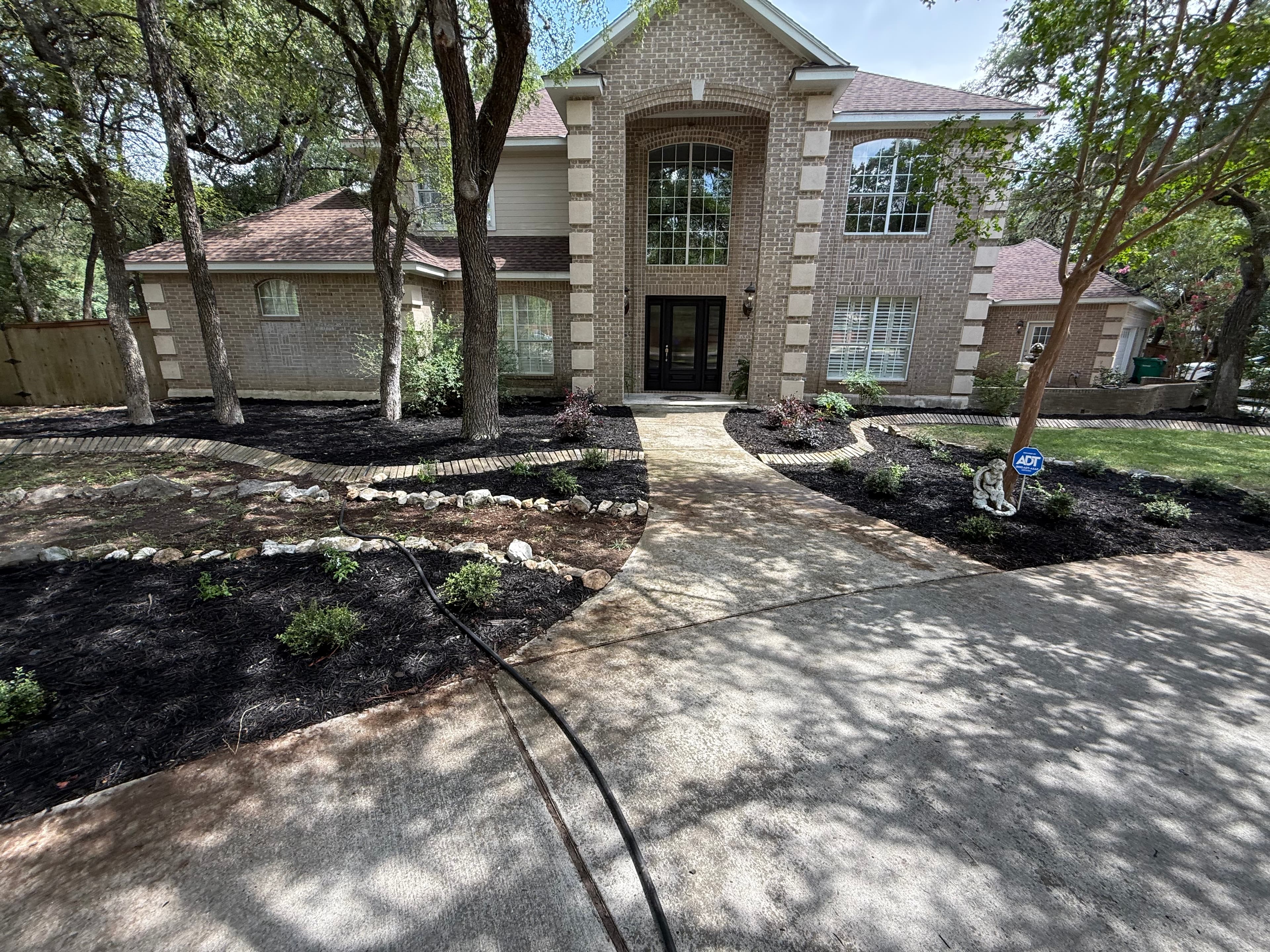
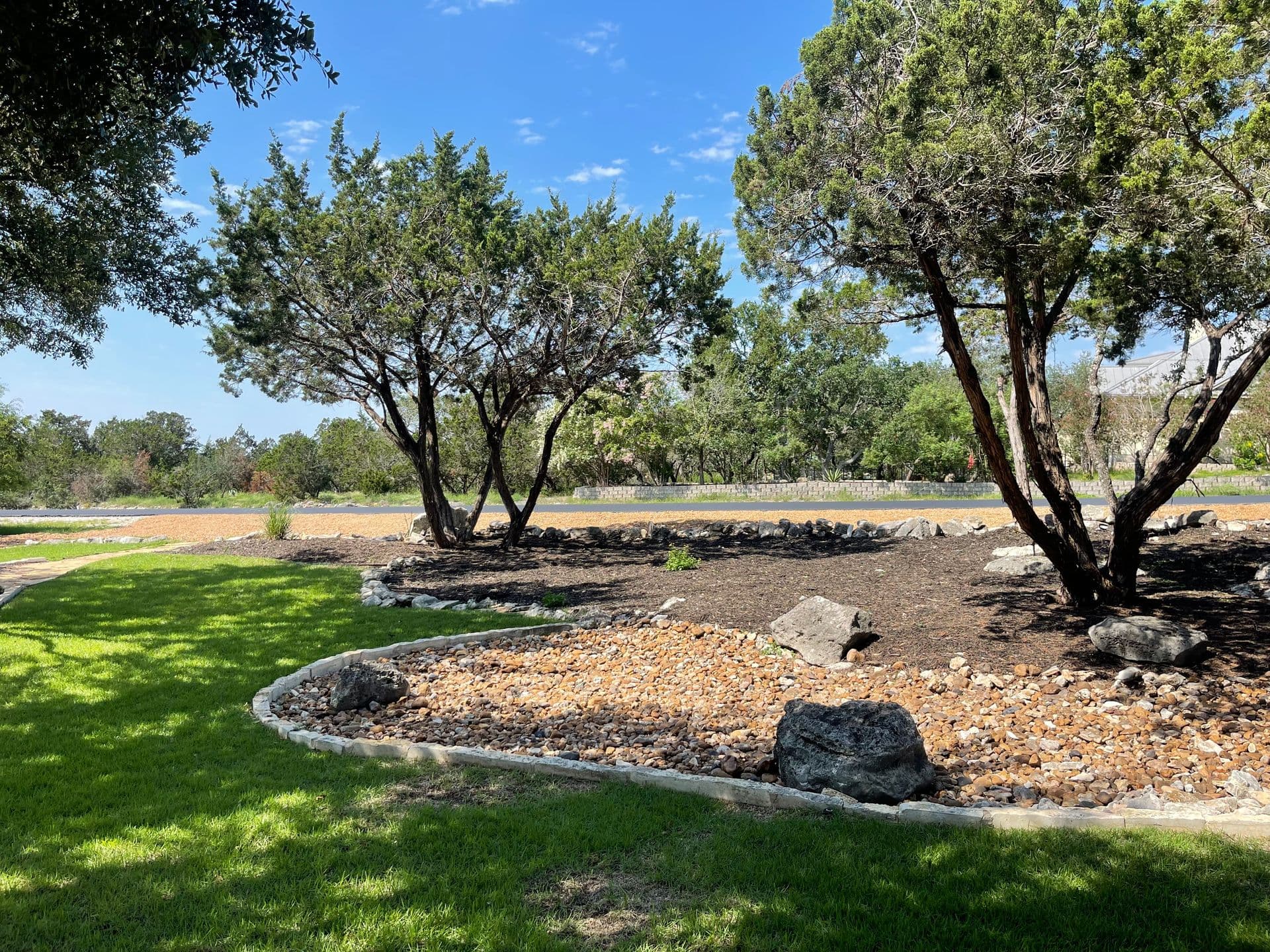
Services
Full-sized Tree Installs
Mature tree installs — live oaks, cedar elms, magnolias, and more — set at proper depth with amended soil, a stake kit, and a deep-watering basin. Starts at $275 for a 15-gallon tree; 30-gallon, 65-gallon, and B&B specimen pricing quoted at the walk.
Pricing varies by site. Final scope, materials, and access influence the all-in number — we'll quote your specific project after a quick conversation.
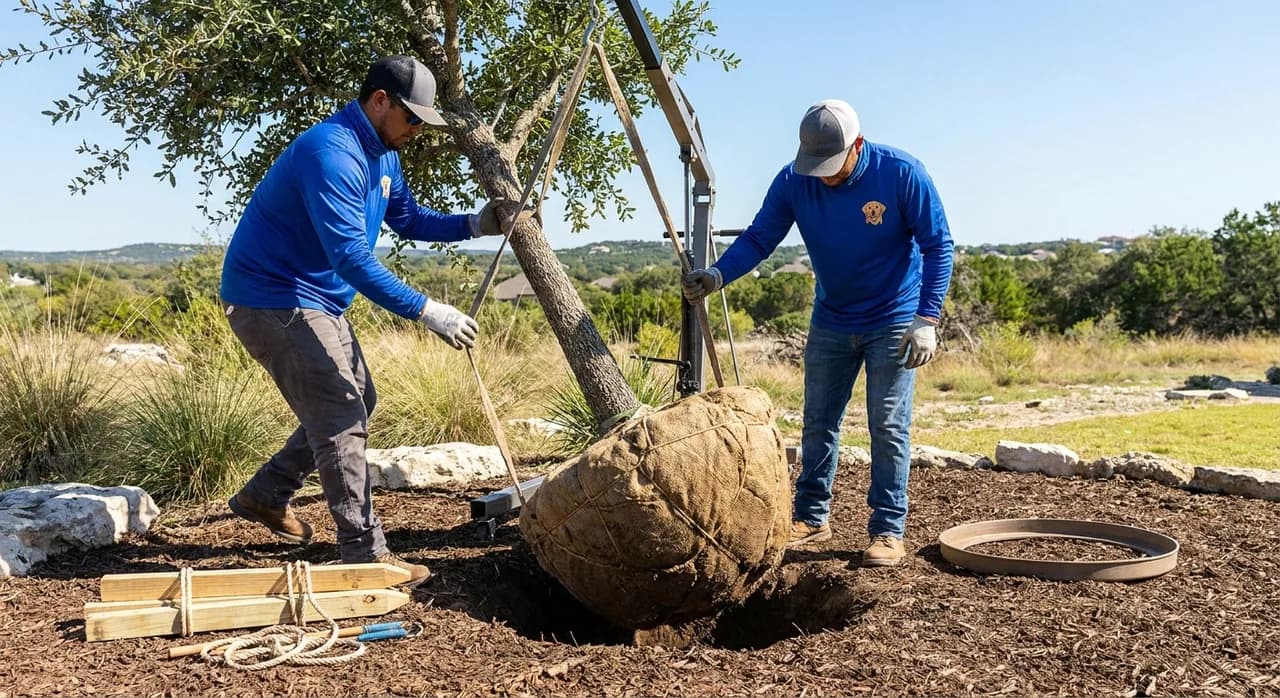
About our full-sized tree installs work
Mature tree installs anchored by species that genuinely belong in this region — live oaks, cedar elms, Mexican white oaks, bur oaks, Texas red oaks, magnolias, and Mexican sycamores. We avoid the short-lived popular picks that fail by year 10 in caliche soil and instead build the landscape around trees that hit 50, 80, even 150-year canopy potential.\n\nA tree planted wrong is a tree that fails slow. Most San Antonio tree losses trace to two mistakes — planted too deep and watered shallow. Our install protocol sets the root flare 1 to 2 inches above finished grade, amends the planting pit only at the edges (never under the root ball), and builds a 4-foot-diameter watering basin for deep saturation. Staking is done with arbor-grade webbing on a 3-stake kit, set loose enough to allow trunk flex, which builds caliper strength.\n\nPricing starts at $275 for a 15-gallon tree. 30-gallon runs $475 to $650 depending on species. 65-gallon, 100-gallon, and B&B specimen trees — including field-dug live oaks — are quoted at the site walk based on access, crane requirements, and source nursery.
What's included
- Tree sourcing from regional growers and tree farms
- Excavation of properly sized planting pit
- Root flare set at correct depth above grade
- Backfill with native soil and edge amendment
- 3-stake arbor kit with flexible webbing
- Deep-watering basin built around root zone
- Mulch ring pulled back from trunk flare
- Initial deep soak-in and watering instructions
Materials & techniques
We plant flush-grade with the root flare visible — the single most important variable in long-term tree survival. Backfill is native soil from the pit, not bagged garden mix, because root systems that grow into amended pockets refuse to push past the amendment boundary into surrounding clay. Staking uses wide arbor webbing rather than wire-in-hose because wire girdles bark during high winds even with the hose buffer. Mulch is shredded hardwood, 3 inches deep, and never volcano-mulched against the trunk. For B&B trees, burlap is folded down and wire baskets are partially cut back at the top to prevent future girdling — a step many crews skip.
How the project runs
- 1
Species and site match
We assess soil depth, drainage, overhead and underground utilities, mature canopy clearance, and your goals for shade or screening before committing to a species and caliper size.
- 2
Sourcing and delivery
Trees are tagged at the nursery or tree farm — you can come along — and delivered on the install day. Larger 65-gallon and B&B specimens may require crane or skid-steer placement.
- 3
Pit excavation
Pit is dug 2 to 3 times the width of the root ball and only as deep as the ball itself. Walls are scored to prevent glazing in clay, and percolation is checked in problem zones.
- 4
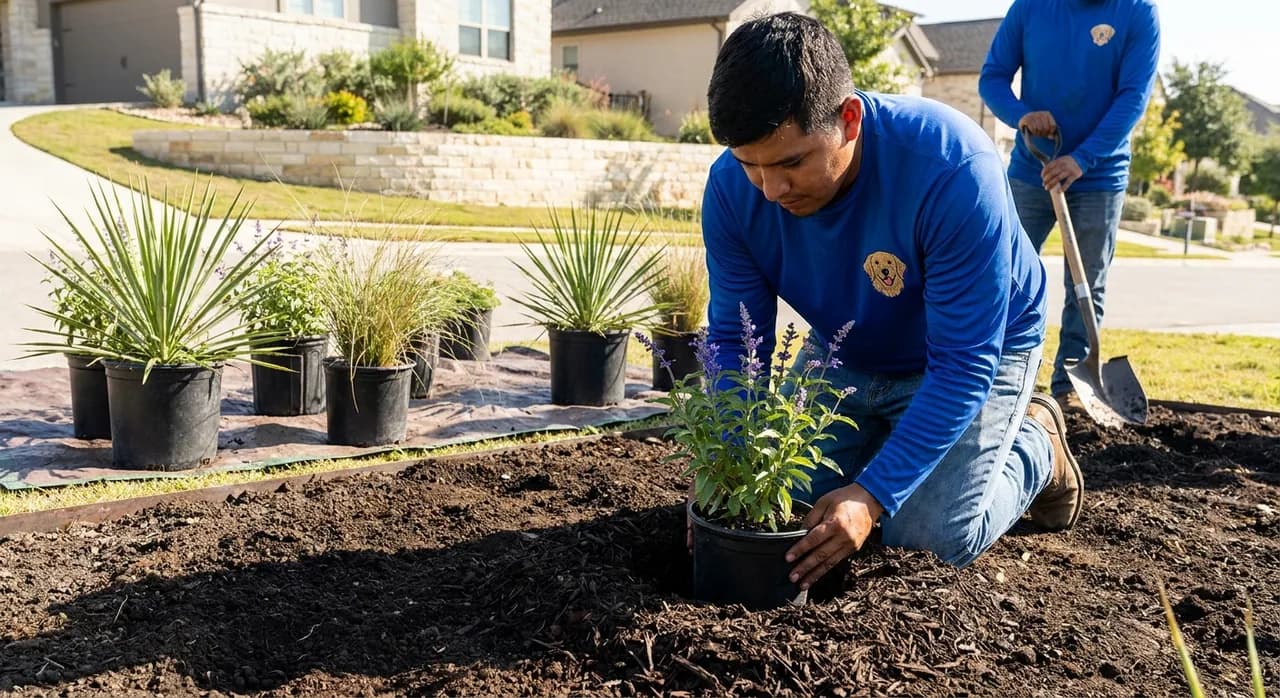
Plant, stake, and basin
Tree is set with root flare visible, backfilled in lifts and watered to eliminate air pockets, then secured with a 3-stake kit. A 4-foot watering basin is shaped on the surface.
- 5
Mulch and follow-up
Basin is mulched 3 inches deep with hardwood mulch held off the trunk. We provide a year-one deep-watering schedule and return to remove stakes after 12 to 18 months.
Frequently asked questions
What's the best shade tree for San Antonio?
Live oak remains the standard for long-term canopy and drought tolerance, but cedar elm, bur oak, Mexican white oak, and Texas red oak all perform well and add species diversity to a yard. We typically recommend mixing two or three species rather than planting a monoculture.
Should I worry about oak wilt?
Yes — oak wilt is endemic in Bexar, Comal, and Kendall counties. We only prune red and white oaks during the safe window (July through January) and seal every cut immediately. New plantings are not high risk, but post-install pruning needs to follow protocol.
How long until a 30-gallon live oak provides real shade?
A healthy 30-gallon live oak typically casts usable shade within 4 to 6 years and becomes a true canopy tree at 10 to 15 years. Watering depth in years one and two is the single biggest accelerator.
Do you handle large specimen trees and B&B?
Yes — we install 65-gallon, 100-gallon, and field-dug B&B specimens. These typically require skid-steer or crane placement and are priced at the walk based on access, source, and root-ball handling requirements.
How much should I water a newly installed tree?
For the first 4 to 6 weeks, a deep soak in the watering basin every 2 to 3 days. From month two through year one, taper to once a week with a slow trickle for 30 to 45 minutes. Frequency matters less than depth.
Why hire us for full-sized tree installs
In-house crew
Design, build, irrigation, and maintenance all run under one roof — no subbing out, no juggling vendors. You get one project manager from sketch through final walk-through.
San Antonio specialists
Built for South-Central Texas — heavy clay, caliche, long dry summers, and flash rain. Our designs and installs are tuned to what survives and looks good locally.
Clear pricing
No surprise line items. We size the work after a quick conversation or site visit and issue a written quote with materials and labor broken out so you can compare apples to apples.