Services
Wood & Composite Decks
Custom decks in cedar, ipe, pressure-treated pine, or composite (Trex, TimberTech, Azek). Engineered substructure, hidden fastener systems, code-compliant railings, and proper flashing where the deck ties to the house. Built level, square, and tight for the long haul.
Pricing varies by site. Final scope, materials, and access influence the all-in number — we'll quote your specific project after a quick conversation.
About our wood & composite decks work
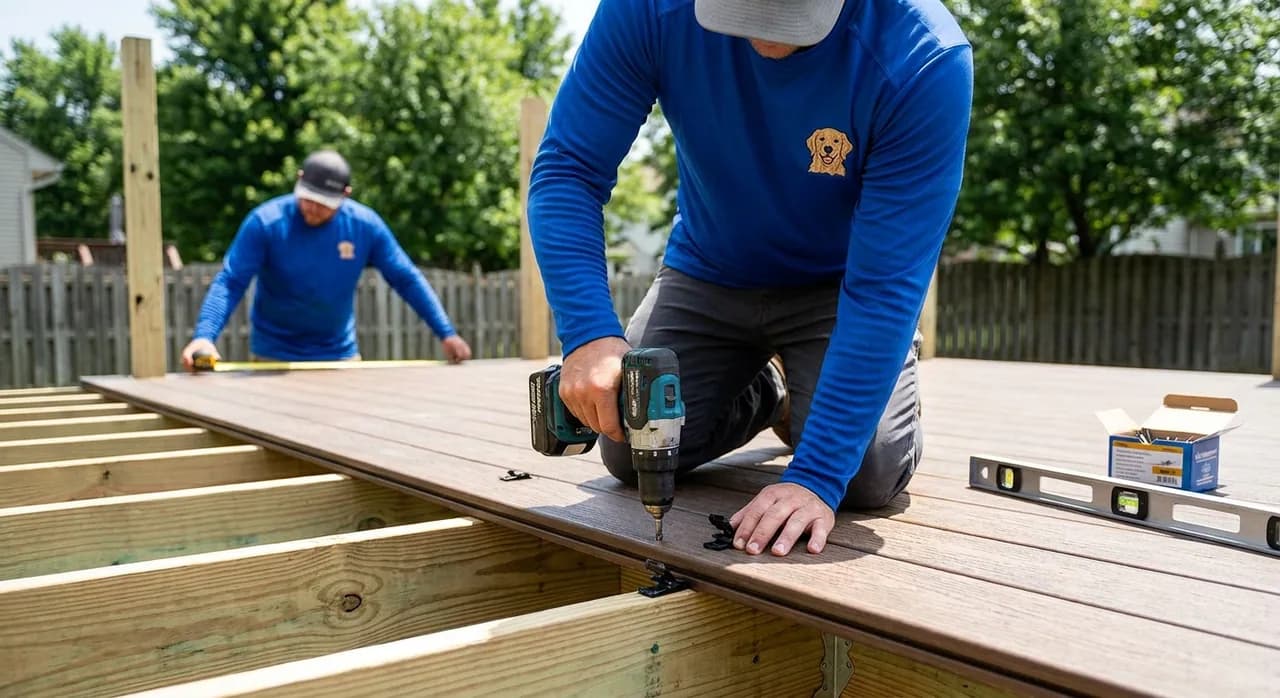
Custom decks framed to take Texas weather and finished to stay tight underfoot for decades. We build in western red cedar, ipe, pressure-treated southern yellow pine, or composite — Trex Transcend, TimberTech Advanced PVC, and Azek being the three composites we actually stand behind. Substructure is the difference between a deck that lasts 25 years and one that sags in 7. We use 2x10 or 2x12 PT joists at 16-inch on-center (12-inch for ipe and most composites), double rim joists, and Simpson joist hangers on every connection — no toe-nailing into the ledger. The ledger gets through-bolted to rim joist or blocking with proper Z-flashing, butyl tape, and ledger flashing tucked behind the WRB. Decking goes down with hidden fastener systems (Camo, Kreg, Tiger Claw) on grooved boards, or stainless trim-head screws on face-screwed runs. Railings meet IRC 200-lb load — either cable, aluminum picket, or wood-framed with proper post blocking. We flash every penetration, slope toward drainage, and seal end-grain on every cut. Stain or pre-finish is locked in before delivery.
What's included
- Engineered substructure with PT 2x10 or 2x12 joists
- Simpson joist hangers, hurricane ties, and through-bolted ledger
- Z-flashing, butyl tape, and proper WRB integration at ledger
- Hidden fastener systems on grooved decking
- Code-compliant railing with engineered post blocking
- Stainless or hot-dip galvanized fasteners throughout
- End-grain sealer on every field cut
- Stain and seal on wood, or factory finish on composite
Materials & techniques
Pressure-treated framing is ground-contact rated (UC4A minimum) — we don't use above-ground-only PT in substructure, period. Cedar is select tight-knot or better, ipe is FSC-certified S4S with end-sealer pre-applied. Composite decking is installed per manufacturer span tables (Trex requires 12-inch OC for diagonal runs — we don't fudge that). Fasteners are stainless 305 or 316 on cedar and ipe (zinc reacts with tannins and bleeds), hot-dip galvanized on PT. Ledger flashing is a three-part system: butyl tape on the sheathing, Z-flashing over the ledger top, and counter-flashing tucked behind the WRB. Stain is penetrating oil for cedar (TWP 1500 series), ipe oil for ipe, and pigmented sealer for PT after a 90-day weathering period.
How the project runs
- 1
Layout, elevation, and footings
We shoot grade, set deck height for door thresholds, and dig footings to bearing — 24 to 36 inches depending on soil and frost.
- 2
Ledger and substructure
Ledger goes on with flashing tape, Z-flashing, and structural screws or through-bolts. Joists hang on Simpson hardware, never toe-nailed.
- 3
Decking installation
Boards run with proper end-gap, hidden fasteners on grooved stock, and picture-frame borders where the design calls for it.
- 4
Railings, stairs, and skirting
Stairs framed with stringers cut for code-compliant rise/run. Railings post-blocked into the rim. Skirting installed with ventilation gaps.
- 5
Finish and walkthrough
Stain or sealer applied at proper moisture content. We review fastener maintenance and re-stain intervals before handing keys back.
Frequently asked questions
Cedar, ipe, PT, or composite?
PT is the budget pick and looks fine stained — 15–20 years. Cedar is warmer and lighter, 20–25 years with maintenance. Ipe is 40+ years, hardest to work, and the most expensive wood. Composite is zero maintenance, 25-year warranty, and the smart pick for west-facing decks that bake all summer.
How long does a deck build take?
Standard 200–400 sq ft attached deck: 7–14 working days from permit-in-hand. Larger multi-level builds or ipe installs run 3–6 weeks. Weather and inspection scheduling can add days.
Do I need a permit?
In most San Antonio jurisdictions, yes — any deck over 30 inches off grade or attached to the house typically requires a permit and inspection. We pull permits, schedule footing and final inspections, and handle the paperwork.
How is the deck attached to the house?
The ledger board is through-bolted to the rim joist or blocking with 1/2-inch lag screws or structural screws on a code-spec pattern, with flashing tape, Z-flashing, and proper WRB integration. We never face-nail a ledger to siding — that's how decks fall off houses.
Hidden fasteners or face-screw?
Hidden fasteners on grooved boards give a cleaner look and skip the screw-head maintenance, but they cost more and slow installation. Face-screwed with color-matched stainless trim-heads is faster, holds equally well, and is easier to replace a board down the road.
Why hire us for wood & composite decks
In-house crew
Design, build, irrigation, and maintenance all run under one roof — no subbing out, no juggling vendors. You get one project manager from sketch through final walk-through.
San Antonio specialists
Built for South-Central Texas — heavy clay, caliche, long dry summers, and flash rain. Our designs and installs are tuned to what survives and looks good locally.
Clear pricing
No surprise line items. We size the work after a quick conversation or site visit and issue a written quote with materials and labor broken out so you can compare apples to apples.