Services
Covered Patios & Patio Covers
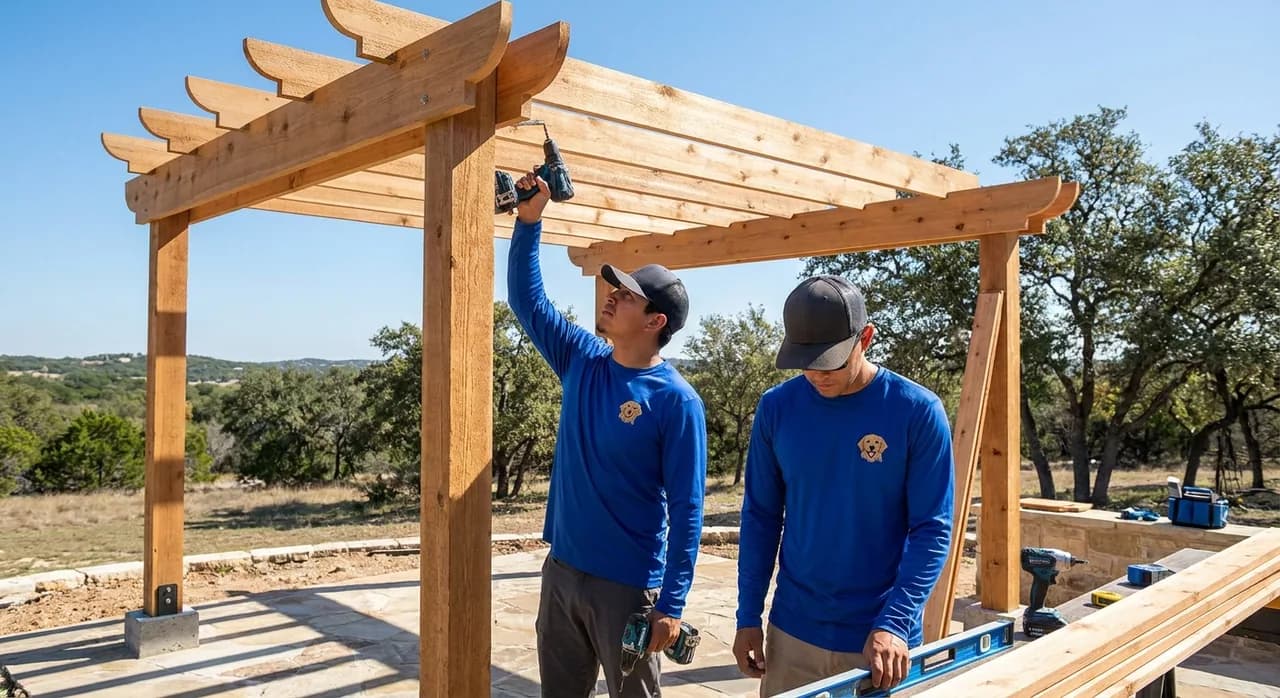
Attached and freestanding patio covers — wood-framed with shingled or metal roofing, insulated panel systems, or aluminum lattice. Built to code with proper flashing into the home's wall, fully engineered for wind load. Shade, rain protection, and instant living square footage.
Pricing varies by site. Final scope, materials, and access influence the all-in number — we'll quote your specific project after a quick conversation.
About our covered patios & patio covers work
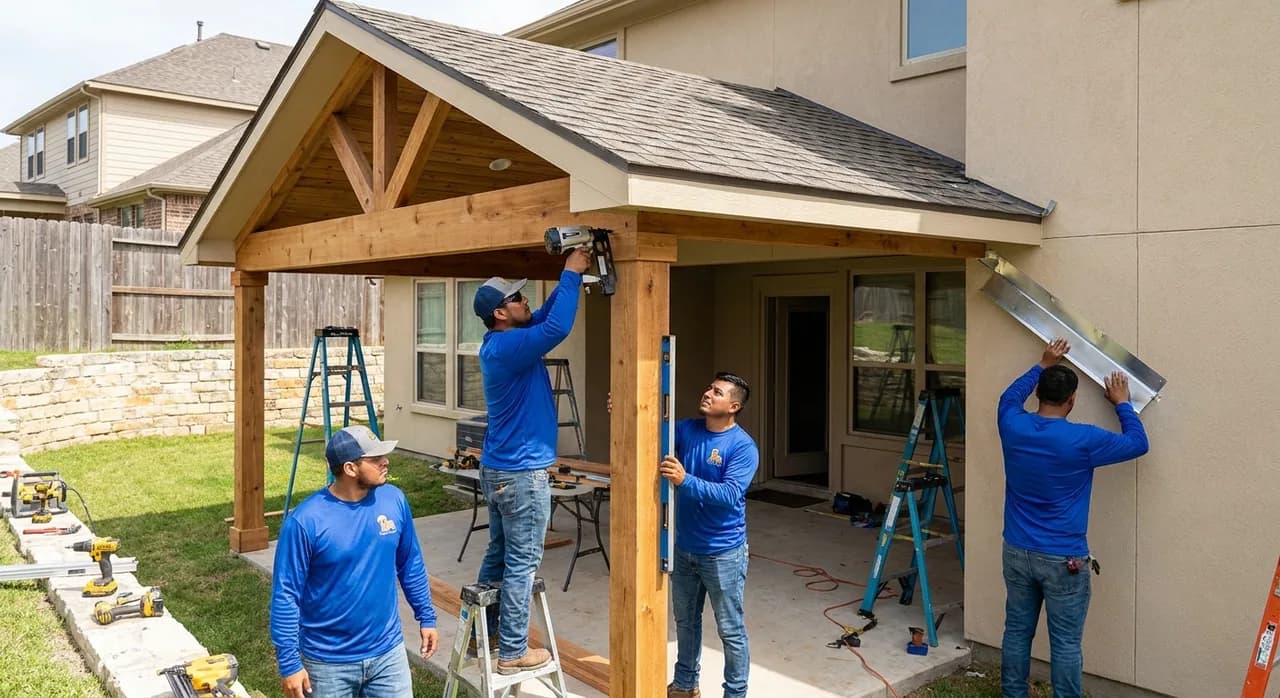
Attached and freestanding patio covers engineered for Texas wind load and built with the flashing details that keep water out of your wall. We frame in PT lumber, structural steel, or aluminum lattice — picked by span, look, and what the roof has to carry. Attached covers tie to the house with a ledger board through-bolted to rim or blocking, with step-flashing or counter-flashing tucked behind siding or under brick weep. We don't lap-shingle into existing siding and hope for the best — that's how water gets behind the WRB and rots framing. Roofing options are architectural shingle on framed roof decks, standing-seam metal in 24-gauge Galvalume or Kynor-coated steel, R-panel for budget metal, or insulated panel systems (Alumawood, Ultra-Patios) when you want a cooler roof without full framing. Posts land on Simpson post bases over engineered footings, not face-anchored to slab edges. Slope is sized to clear gutters during a Texas downpour — typically 2:12 minimum on metal, 4:12 on shingle. Soffits, fascia, and ceiling finish (T&G, beadboard, smooth ceiling) finish the look.
What's included
- Engineered footings with Simpson post bases
- Through-bolted ledger with flashing tape and Z-flashing
- Step-flashing or counter-flashing into existing wall
- PT or KDAT framing with hurricane ties at every bearing
- Standing-seam metal, R-panel, shingle, or insulated panel roof
- Gutters and downspouts sized to roof area
- Soffit, fascia, and ceiling finish
- Permit drawings and stamped engineering where required
Materials & techniques
Ledger flashing is non-negotiable — butyl tape on the sheathing, Z-flashing capping the ledger top, and the existing WRB lapped over the top of the Z-flashing. Step-flashing on shingle-to-wall transitions, counter-flashing on metal roof-to-wall. Standing-seam metal panels use concealed clip systems with a slip joint to handle thermal expansion — we don't through-fasten metal panels into the deck. Insulated panel systems (Alumawood, Ultra-Patios) come pre-engineered with span tables and post-load specs; we install per manufacturer cut sheets to keep the structural warranty intact. Gutters are 6-inch K-style minimum on anything over 200 sq ft of roof area — undersized gutters back up in a real Texas downpour and ice the fascia.
How the project runs
- 1
Site evaluation and design
We measure ceiling heights, check existing wall construction, and confirm where the roof can tie in without raising the existing roof line.
- 2
Permits and engineering
Stamped engineering for wind load (115 mph) and post-to-footing connection. Permit pulled with the AHJ before any digging.
- 3
Footings and post set
Piers are augered to bearing soil, rebar caged, and poured with anchor bolts template-set for post bases.
- 4
Frame, flash, and roof
Ledger goes on with full flashing detail. Rafters hang on hardware. Roof deck, underlayment, and finish roofing installed with proper drip edge and counter-flashing.
- 5
Finish, gutters, and inspection
Soffit, fascia, ceiling finish, and gutters wrap the build. Final inspection closes the permit.
Frequently asked questions
Wood roof or metal roof?
Metal sheds heat better and lasts 40–60 years with minimal maintenance. Wood-framed with shingle matches the house and runs cheaper upfront, but you'll re-roof in 20–25 years. Insulated aluminum panels are the middle ground — cooler than metal-on-deck, faster to install, and stay clean.
Will the cover make my house darker?
Attached covers over windows reduce interior light, especially on north-facing rooms. We can spec skylights, polycarbonate panels, or pull the cover back from windows to keep light in. Insulated panels can be specced with integrated skylights.
Do I need a permit?
Yes, in every San Antonio jurisdiction. Attached covers require structural permits, stamped engineering above certain sizes, and inspection. Freestanding covers over the size threshold (varies by AHJ) also require permits.
Can you cover an existing concrete patio?
Usually yes, but we core the slab and verify thickness and rebar before anchoring posts. Thin patios get isolated piers through or beside the slab. We won't anchor a structural post to 3 inches of unreinforced concrete.
How does the roof tie into my existing roof?
Either below the existing eave with counter-flashing under the existing fascia, or with a saddle that ties into the existing roof plane and re-flashes the shingle field. The second option is more invasive but looks integrated. Both are valid — depends on roof geometry.
Why hire us for covered patios & patio covers
In-house crew
Design, build, irrigation, and maintenance all run under one roof — no subbing out, no juggling vendors. You get one project manager from sketch through final walk-through.
San Antonio specialists
Built for South-Central Texas — heavy clay, caliche, long dry summers, and flash rain. Our designs and installs are tuned to what survives and looks good locally.
Clear pricing
No surprise line items. We size the work after a quick conversation or site visit and issue a written quote with materials and labor broken out so you can compare apples to apples.