Services
Rock Installations
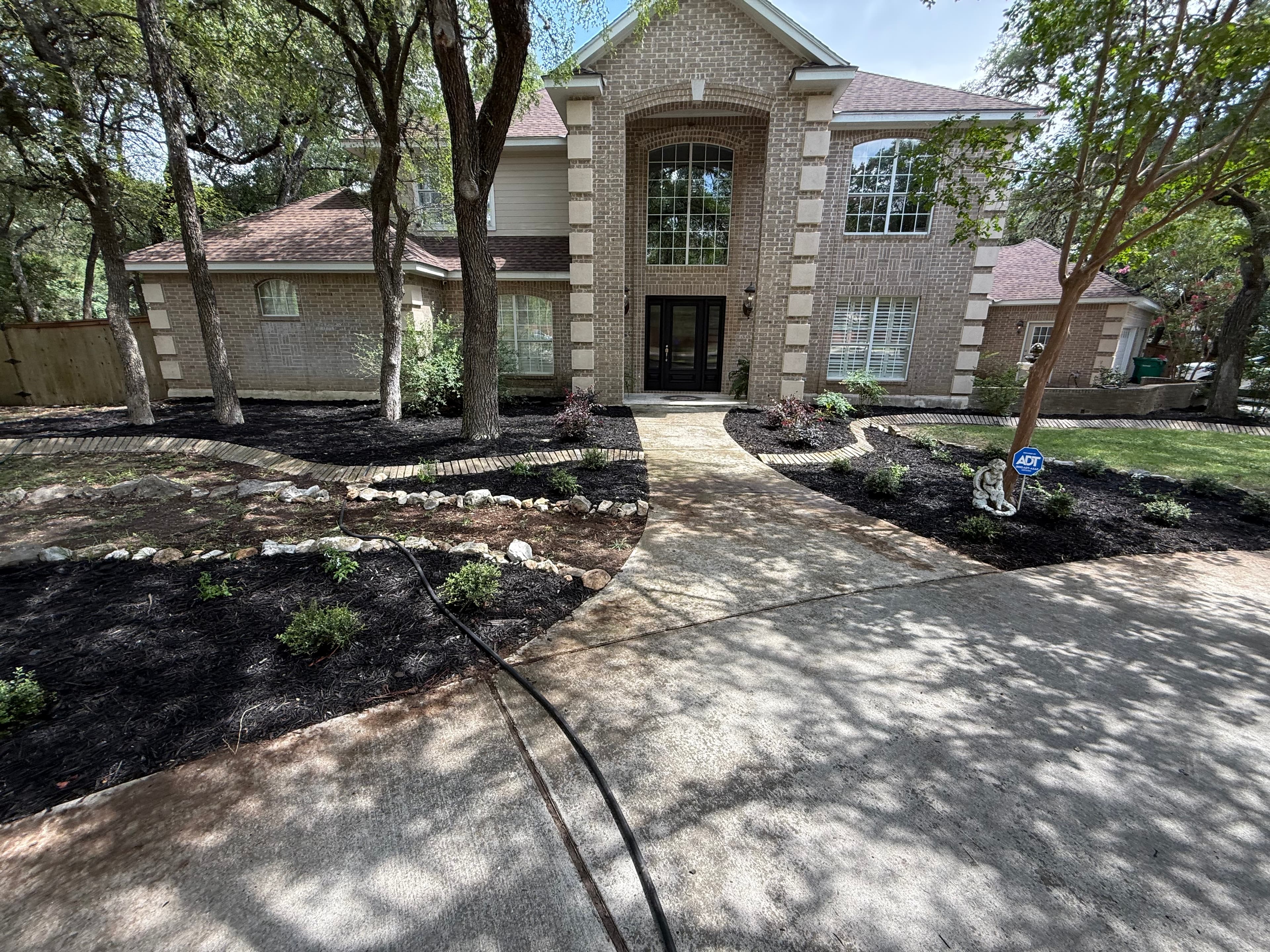
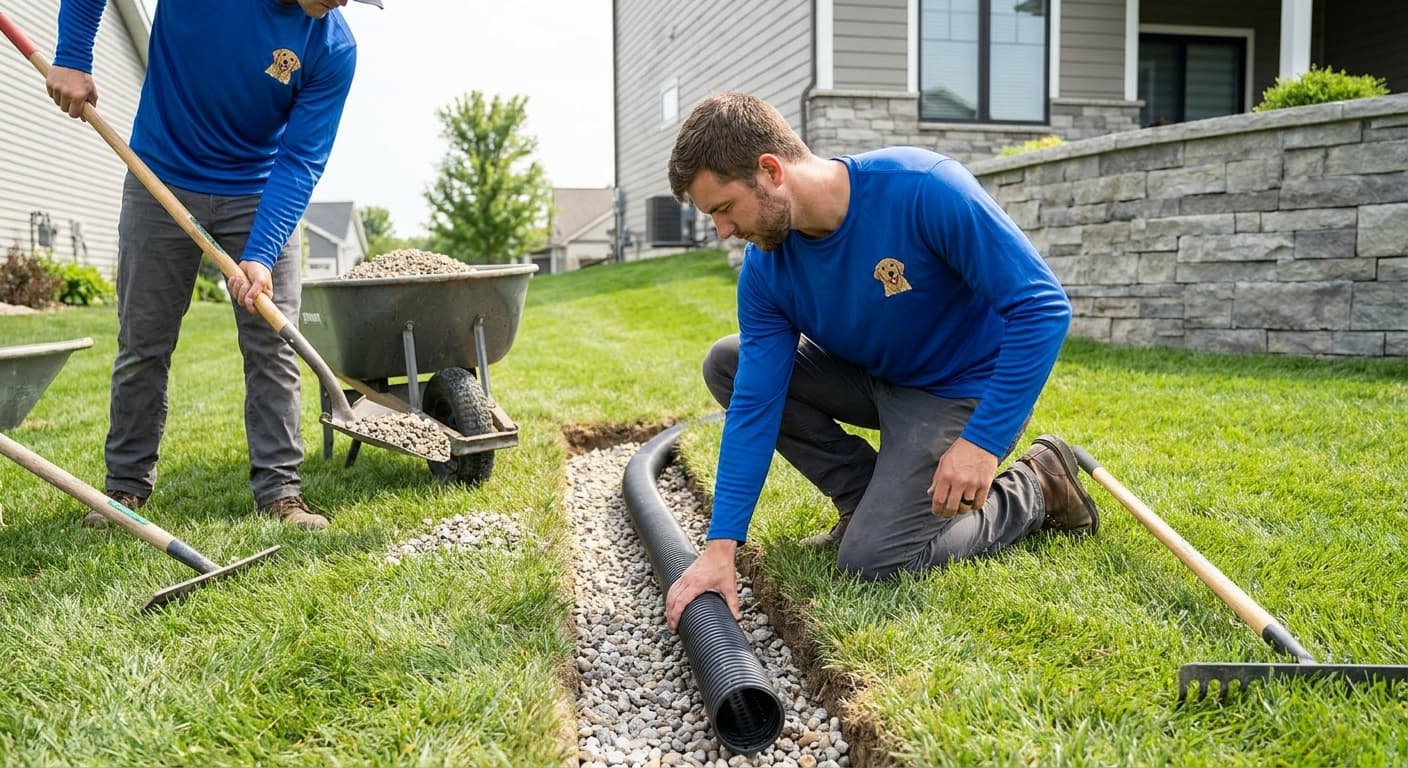
Decorative rock and gravel installs — river rock beds, decomposed granite paths, dry creek beds, and xeriscape ground cover. Proper weed barrier and edge restraint underneath so the material stays put through Texas downpours and keeps a clean line for years.
Pricing varies by site. Final scope, materials, and access influence the all-in number — we'll quote your specific project after a quick conversation.
About our rock installations work
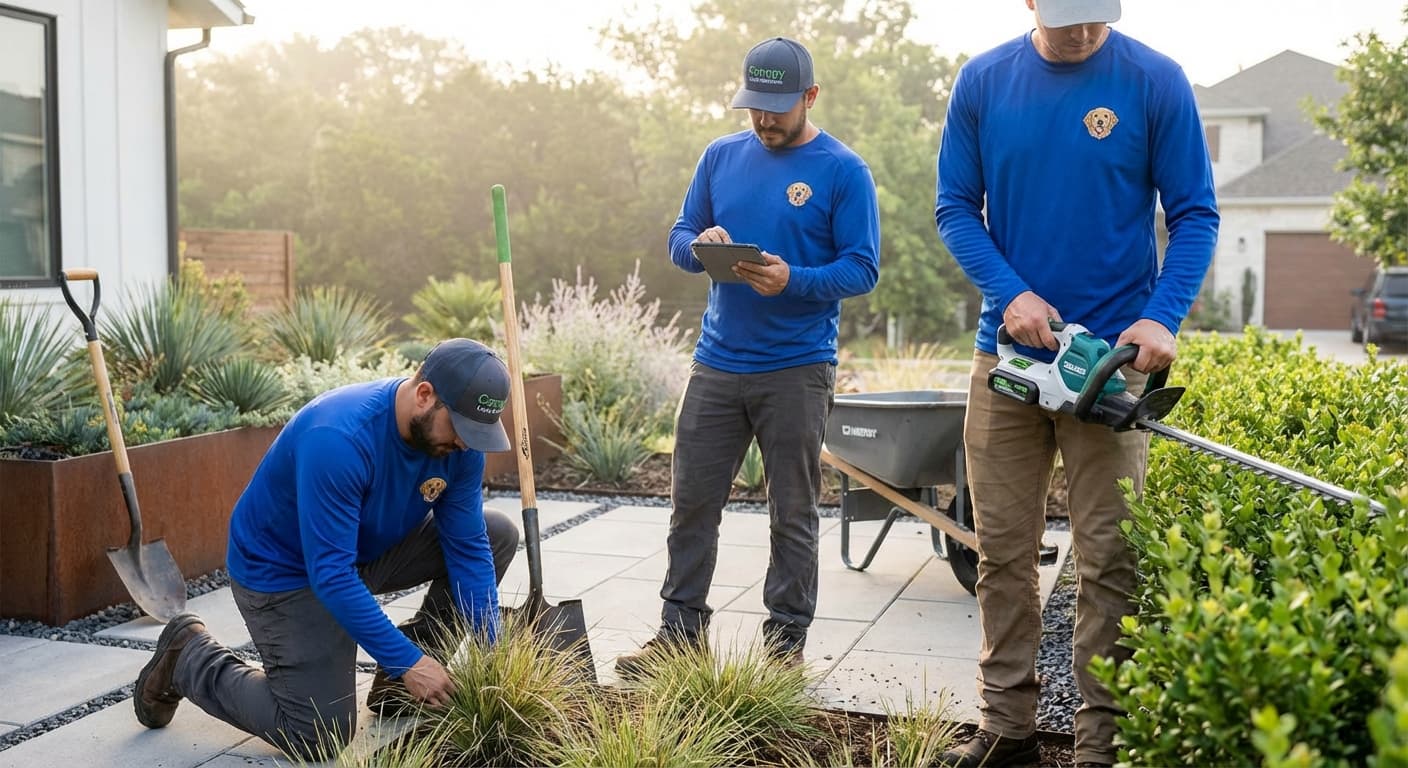
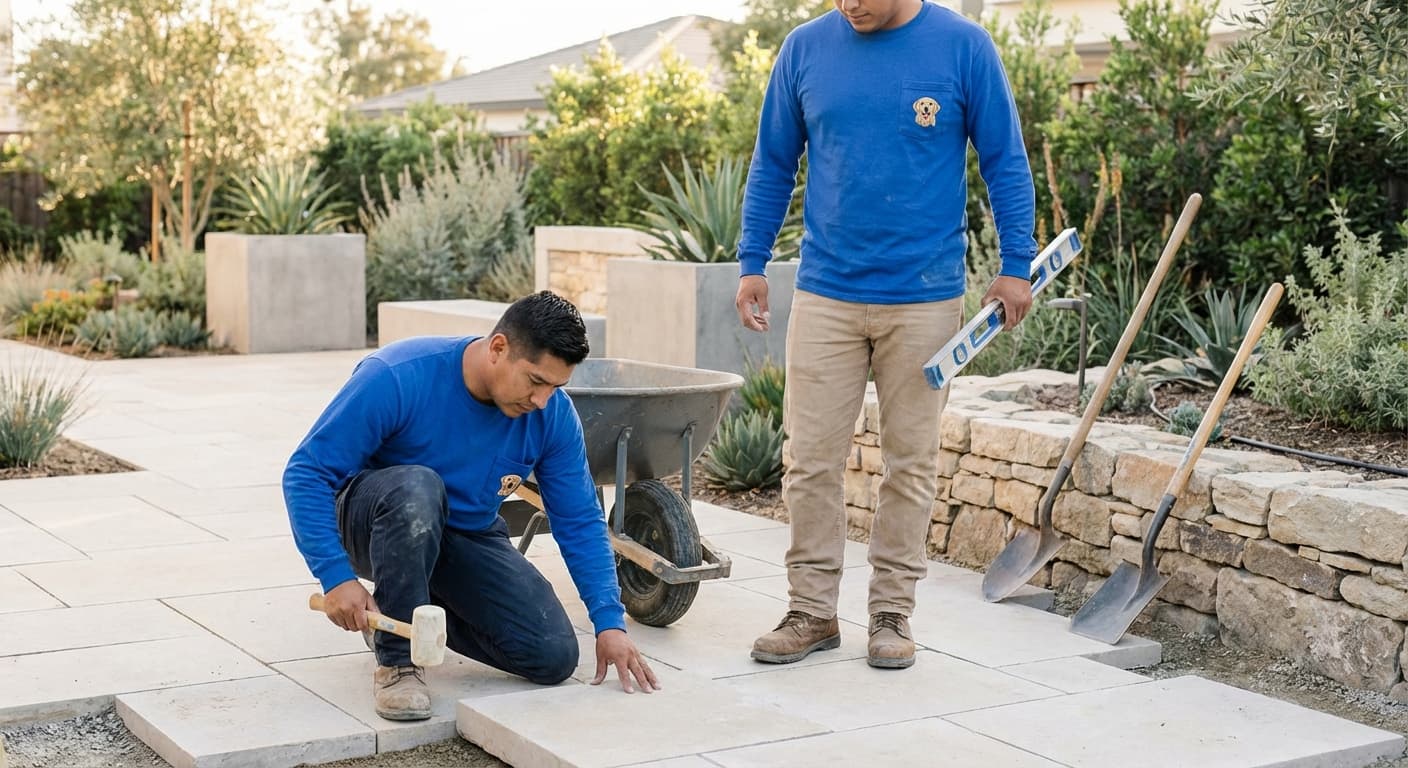
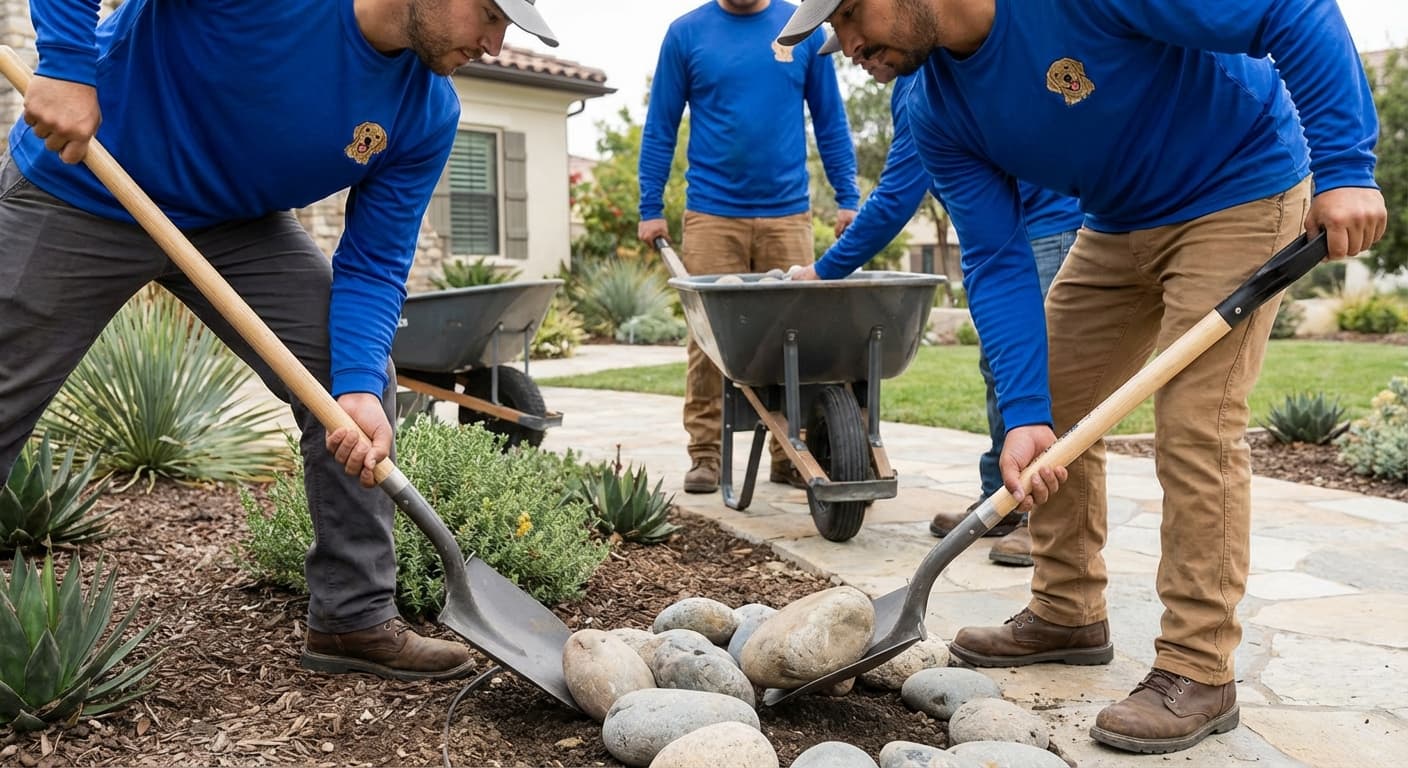
Decorative rock and gravel installs for beds, paths, dry creek beds, xeriscape ground cover, drip-line strips, and equipment pads. We work in river rock, Texas cream rock, Oklahoma chop, decomposed granite, pea gravel, Mexican beach pebble, and crushed limestone — sourced by the yard from regional quarries, not by the bag from a big-box pallet.\n\nA rock install is only as good as what's under it. Weed barrier is heavy-duty 5-ounce woven polypropylene — not the 3-mil black plastic or the flimsy fabric sold in retail rolls — and it's overlapped 6 inches at every seam. Edges get steel bender-board, masonry, or hand-cut spade trenches so the material holds a clean line against beds and turf. Depth is set at 2 to 3 inches for ground cover and 4-plus inches for paths, with the right rock size for the application — pea gravel for walking surfaces, 1 to 2-inch river rock for beds, and 3 to 5-inch chop for dry creeks.\n\nDecomposed granite paths are installed with stabilizer mixed in and compacted in lifts so they don't wash out during the next downpour. Quoted by the square foot with material, base prep, and edging included.
What's included
- Site clearing and removal of existing material
- Grade and base prep for proper drainage
- 5-ounce woven polypropylene weed barrier with seam overlap
- Steel or bender-board edge restraint where needed
- Quarry-sourced rock delivered and placed by yard
- Hand-leveling to consistent depth across the area
- DG path installs with stabilizer and compaction
- Final cleanup, blow-down, and wash of adjacent hardscape
Materials & techniques
Rock is sourced by the yard from Hill Country and South Texas quarries — Texas cream limestone, river rock, Oklahoma chop, and decomposed granite — so color blends look like they belong here, not like a bagged import. Weed barrier is 5-ounce woven polypropylene rated for 15-plus years under cover. Bagged 3-mil plastic is never used — it traps water, kills beneficial soil biology, and tears within a season. Edge restraint is steel or bender-board, anchored every 18 inches. For DG paths, we mix in an organic binder like polymer stabilizer that locks fines in place during downpours and prevents the migration that turns most DG paths into ruts within a year.
How the project runs
- 1
Layout and material pick
We walk the area, mark bed lines and path edges with paint, and bring rock samples on-site so color and size are confirmed against the house and surrounding plants before any material is ordered.
- 2
Demo and grade
Existing mulch, weeds, or failed material is excavated. Grade is checked and adjusted for drainage — rock beds need a slight pitch away from the house and pathways need a crowned or pitched profile to shed water.
- 3
Barrier and edging
Heavy-duty woven weed barrier is rolled out with 6-inch seam overlap and stapled at 18-inch intervals. Steel or bender-board edge restraint is installed where the rock meets turf, beds, or pavement.
- 4
Rock placement
Material is delivered by the yard, wheelbarrowed or skid-steered into place, and hand-leveled to spec depth. DG paths are compacted in 1.5-inch lifts with stabilizer for a hardpan surface that resists washout.
- 5
Finish pass
Edges are dressed, adjacent hardscape is blown clean and rinsed, and we walk the project with you to confirm coverage, depth, and edge lines before close-out.
Frequently asked questions
Will weeds grow through rock beds?
Properly installed beds with 5-ounce woven barrier and 2 to 3 inches of rock stay essentially weed-free at the soil layer. Airborne seeds will eventually land on top and germinate in dust collected between stones — annual blow-out and a pre-emergent in spring keeps that under control.
What's the difference between decomposed granite and pea gravel for a path?
DG compacts into a firm hardpan walking surface that holds up to wheelbarrows, strollers, and bare feet. Pea gravel stays loose and shifts underfoot — better for drip strips along foundations or decorative drainage than for active walking paths.
Will rock beds increase the heat around my house?
Light-colored rock reflects more heat than dark rock or mulch and can raise nearby air temperature by a few degrees on hot days. We typically recommend rock for west and south foundation strips and keep organic mulch closer to plant beds and trees where soil temperature matters.
How much rock do I need per square foot?
Rough rule — 1 cubic yard covers about 100 square feet at 3 inches deep, or 80 square feet at 4 inches. We measure on-site and order with a 10 to 15 percent overage to account for settling and edge loss.
Why hire us for rock installations
In-house crew
Design, build, irrigation, and maintenance all run under one roof — no subbing out, no juggling vendors. You get one project manager from sketch through final walk-through.
San Antonio specialists
Built for South-Central Texas — heavy clay, caliche, long dry summers, and flash rain. Our designs and installs are tuned to what survives and looks good locally.
Clear pricing
No surprise line items. We size the work after a quick conversation or site visit and issue a written quote with materials and labor broken out so you can compare apples to apples.