Services
Drainage
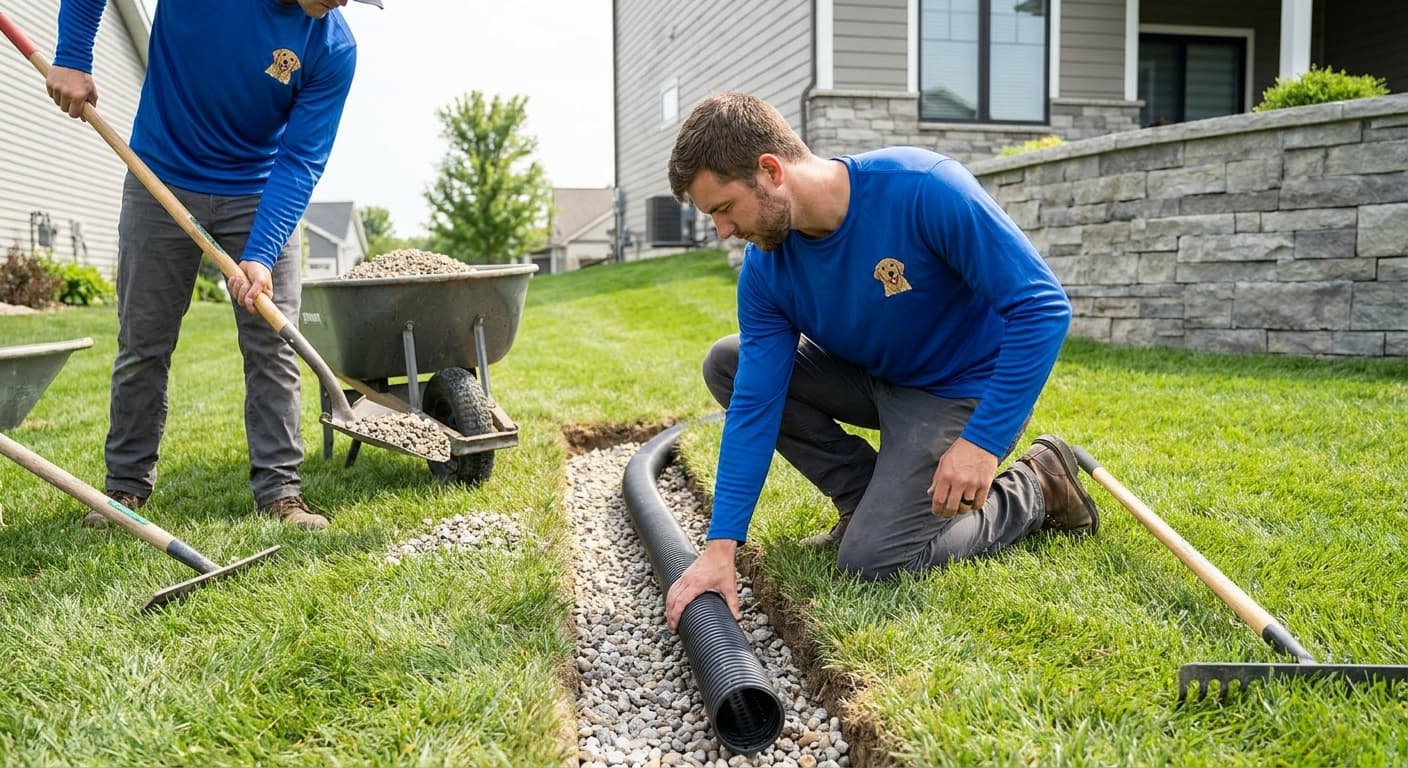
French drains, surface swales, and downspout tie-ins engineered to move water away from structures. Every install includes grading, washed gravel, perforated pipe, and a proper discharge point to protect your foundation and surrounding landscape.
Pricing varies by site. Final scope, materials, and access influence the all-in number — we'll quote your specific project after a quick conversation.
About our drainage work
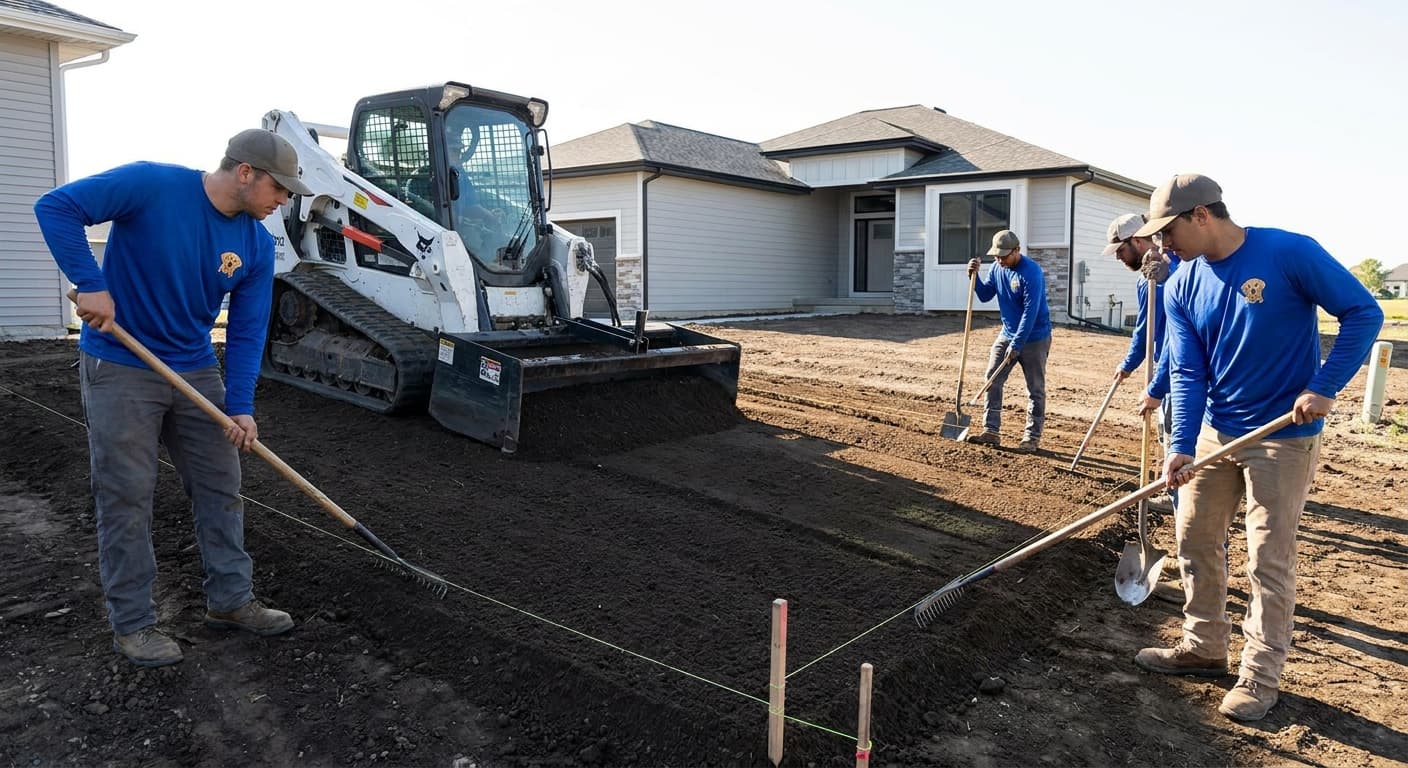
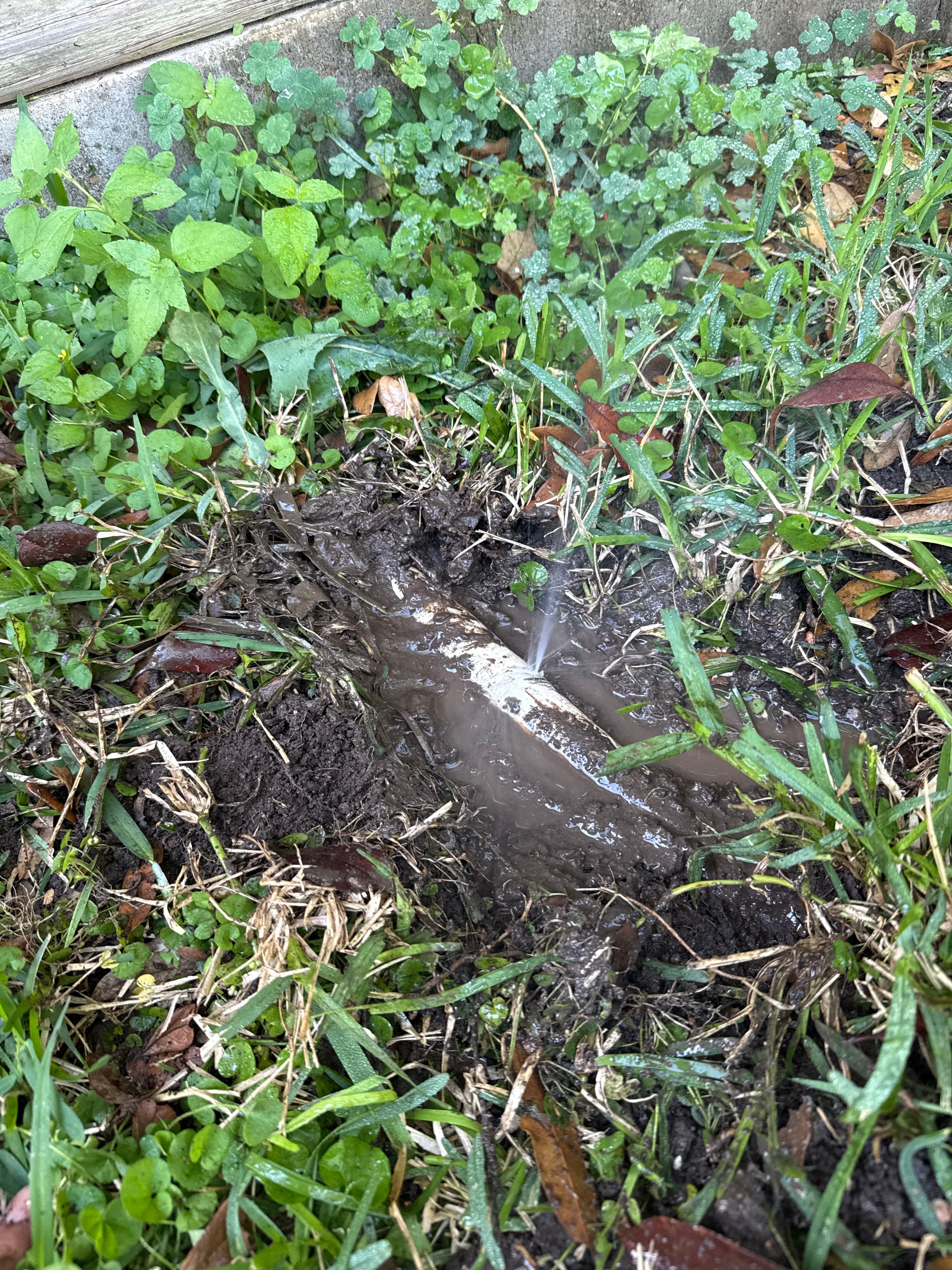
South Texas drainage problems come from three things — flat lots that hold water, clay soils that swell and seal, and flash-flood downpours that overwhelm gutters and grading. Fixing them takes more than dropping a pipe in a trench. Every drainage install we do starts with a slope survey and a discharge plan, because a French drain with nowhere to go is just an expensive trench. We build French drains, surface swales, channel drains, downspout tie-ins, and pop-up emitters — sized to the contributing area and graded at a minimum 1% fall. Perforated SDR-35 or corrugated HDPE with sock, washed #57 gravel, and non-woven geotextile wrap are standard. Discharge goes to daylight, a dry well sized for the storm event, or a curb cut where the city allows. Foundation drainage gets special attention on San Antonio clay. Negative grading against a slab is the most common cause of slab heave and cracking we see — fixing it usually means rebuilding grade, adding a swale, and tying downspouts away from the perimeter. We don't sell a drain you don't need, and we don't undersize the one you do.
What's included
- Slope survey and contributing-area calculation
- French drain trenching, gravel, and perforated pipe
- Surface swale shaping with finish-graded sod or seed
- Downspout tie-ins with solid SDR-35 conduit
- Pop-up emitters, dry wells, or daylight discharge
- Non-woven geotextile wrap to prevent silt clogging
- Catch basins and channel drains for hardscape
- Restoration — sod, mulch, or hardscape patching
Materials & techniques
Material selection matters more on drainage than almost any other site work. We use SDR-35 perforated pipe for French drains where structural strength matters near driveways and walks, and corrugated HDPE with a sock where flexibility helps follow contours. Washed #57 limestone gravel is the bedding standard — it holds void space without clogging. Non-woven geotextile wraps the whole assembly, top and sides, to keep clay fines out of the gravel envelope. Catch basins are NDS or Polylok with grated tops sized to inlet flow. On Hill Country clay, we always overshoot slope when we can — 1.5% to 2% beats the minimum 1%, because settled clay can rob you of half a percent over a few years.
How the project runs
- 1
Site Assessment
Walk the property during or right after a rain when possible. Identify the source, the path, and the destination. Shoot grades with a laser level and confirm where water can legally discharge.
- 2
Design and Sizing
Calculate contributing area, pick pipe diameter — 4 inch for residential roof tie-ins, 6 inch for yard drains, larger for sheet flow. Confirm slope minimums and design the discharge.
- 3
Trenching and Install
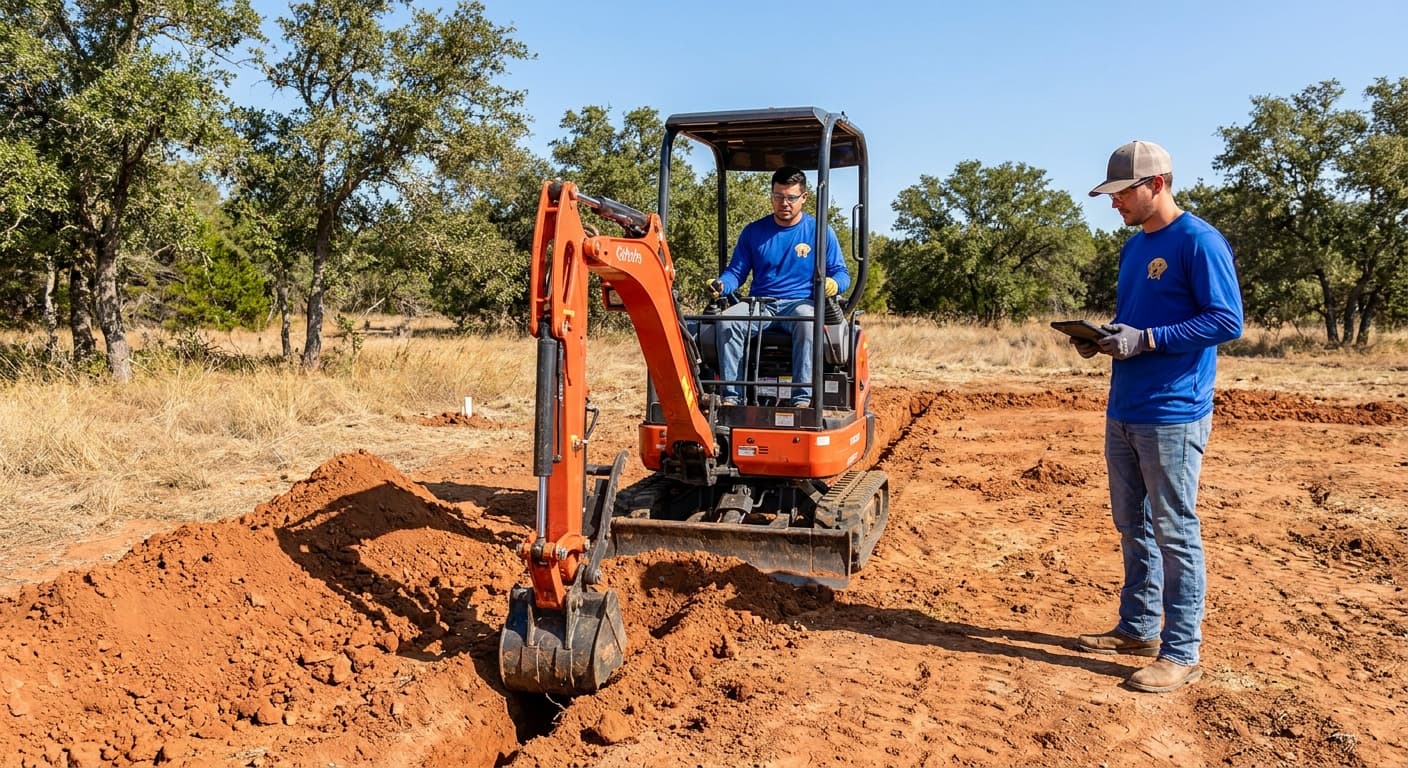
Trench to depth, lay geotextile, bed with washed gravel, set perforated pipe holes-down with sock, backfill with more gravel, wrap, and cap with topsoil or hardscape.
- 4
Discharge and Restoration
Tie into daylight, dry well, or curb cut. Test with a hose at flow, confirm no ponding, restore turf or hardscape, and walk the system with you before final invoice.
Frequently asked questions
How deep does a French drain need to be?
Minimum 18 inches to the top of the pipe for yard drainage, deeper if it's protecting a foundation. The depth depends on what you're intercepting — surface flow needs less, subsurface seepage needs more.
Where does the water actually go?
To daylight on a downslope edge of the property, into a sized dry well if there's no daylight option, or to a curb cut where the city of San Antonio allows it. A drain without a real discharge is a holding tank.
Will a French drain stop my foundation from moving?
It can stop the cause if the cause is water sitting against the slab. We pair drainage with regrading — pulling soil away from the foundation at 5% slope for the first 10 feet — because pipe alone won't fix bad grade.
Do you handle downspout tie-ins separately?
Yes. Tying downspouts into solid SDR-35 and discharging 10-15 feet from the foundation is often the single highest-impact drainage fix on a residential lot. We do it as a standalone scope or as part of a larger system.
How long before a drain clogs?
Properly wrapped in geotextile with washed gravel, a French drain should run 15-25 years before needing service. The failures we see are almost always missing fabric, dirty gravel, or roots entering through an unsealed joint.
Why hire us for drainage
In-house crew
Design, build, irrigation, and maintenance all run under one roof — no subbing out, no juggling vendors. You get one project manager from sketch through final walk-through.
San Antonio specialists
Built for South-Central Texas — heavy clay, caliche, long dry summers, and flash rain. Our designs and installs are tuned to what survives and looks good locally.
Clear pricing
No surprise line items. We size the work after a quick conversation or site visit and issue a written quote with materials and labor broken out so you can compare apples to apples.