Services
Excavation
Precision excavation for foundations, pools, retaining walls, and utility trenches. We manage locates, spoils, and tight-access work with mini excavators and full-size machines so your project starts on solid, level, properly prepared ground.
Pricing varies by site. Final scope, materials, and access influence the all-in number — we'll quote your specific project after a quick conversation.
About our excavation work
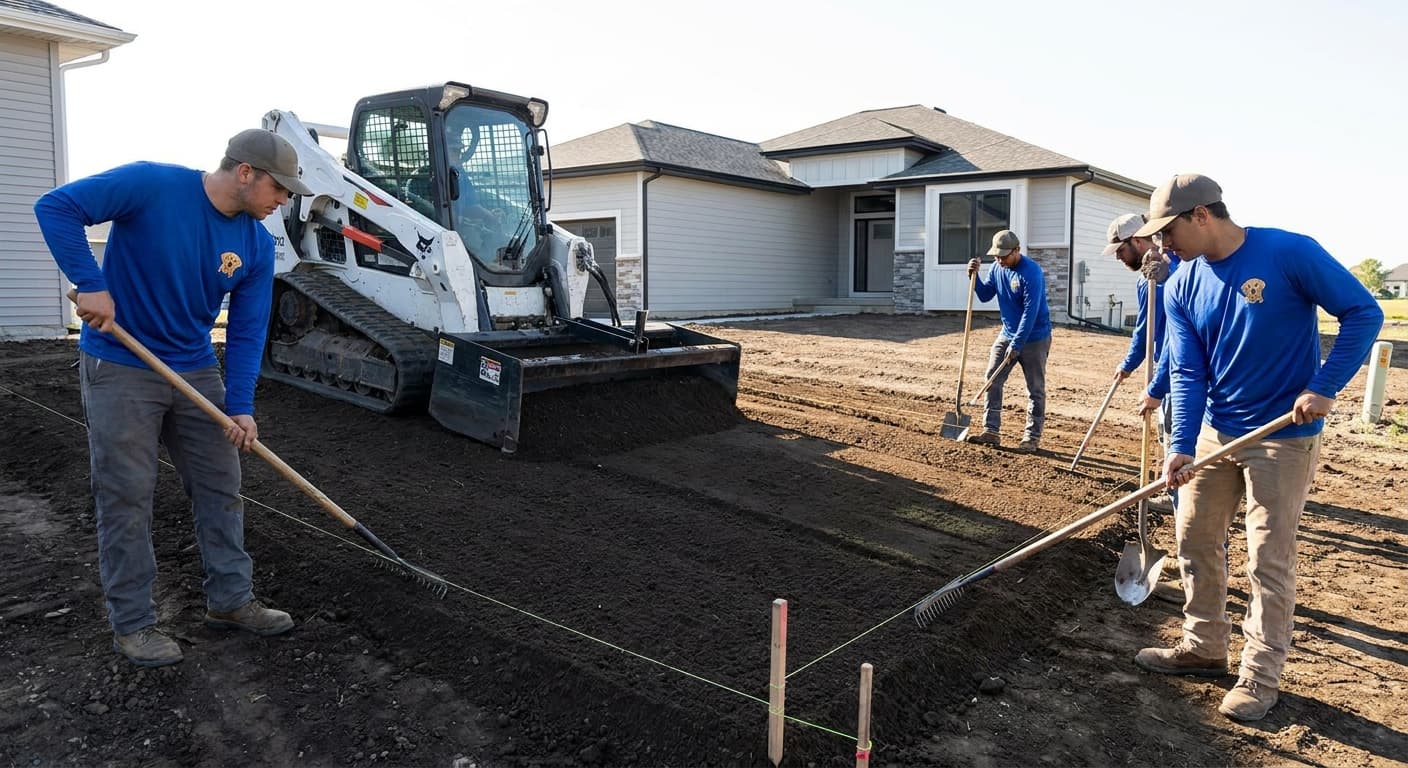
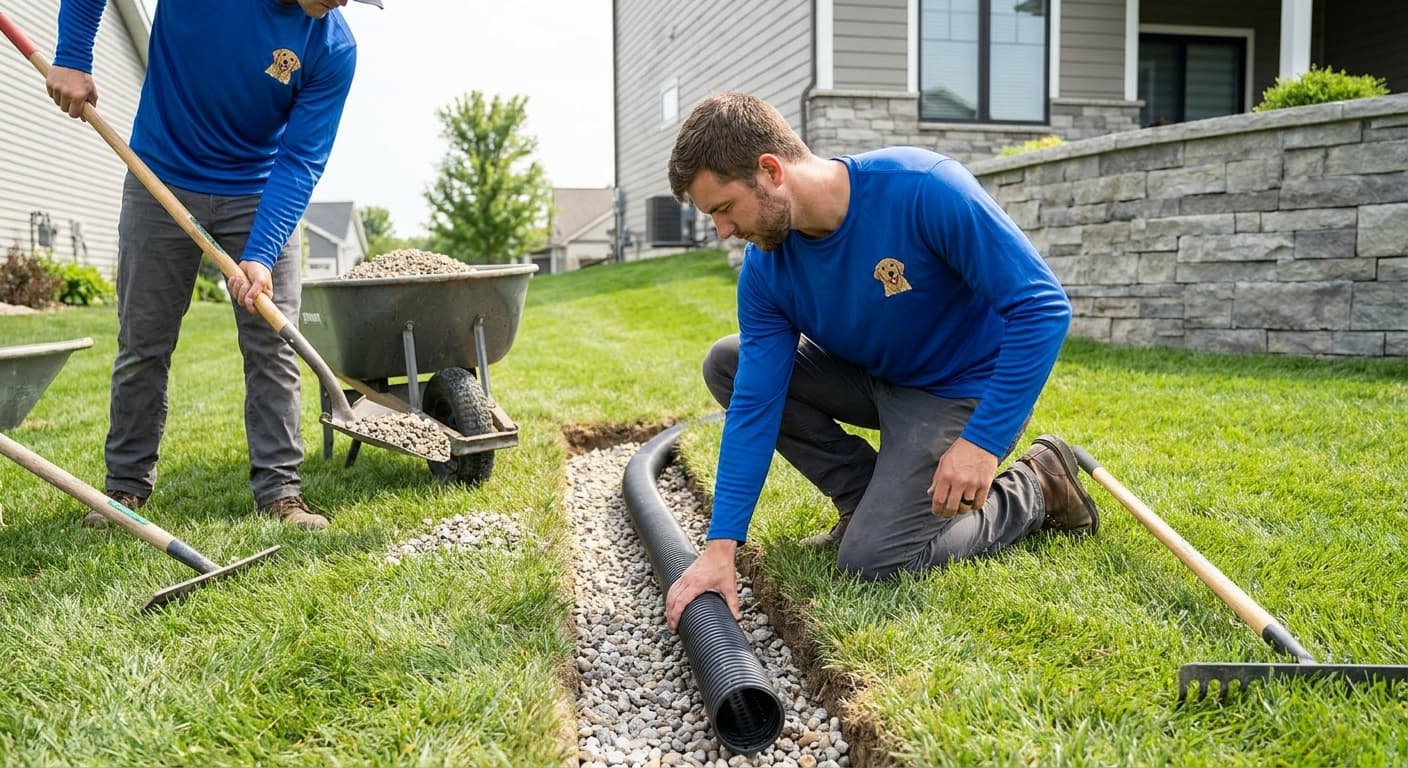
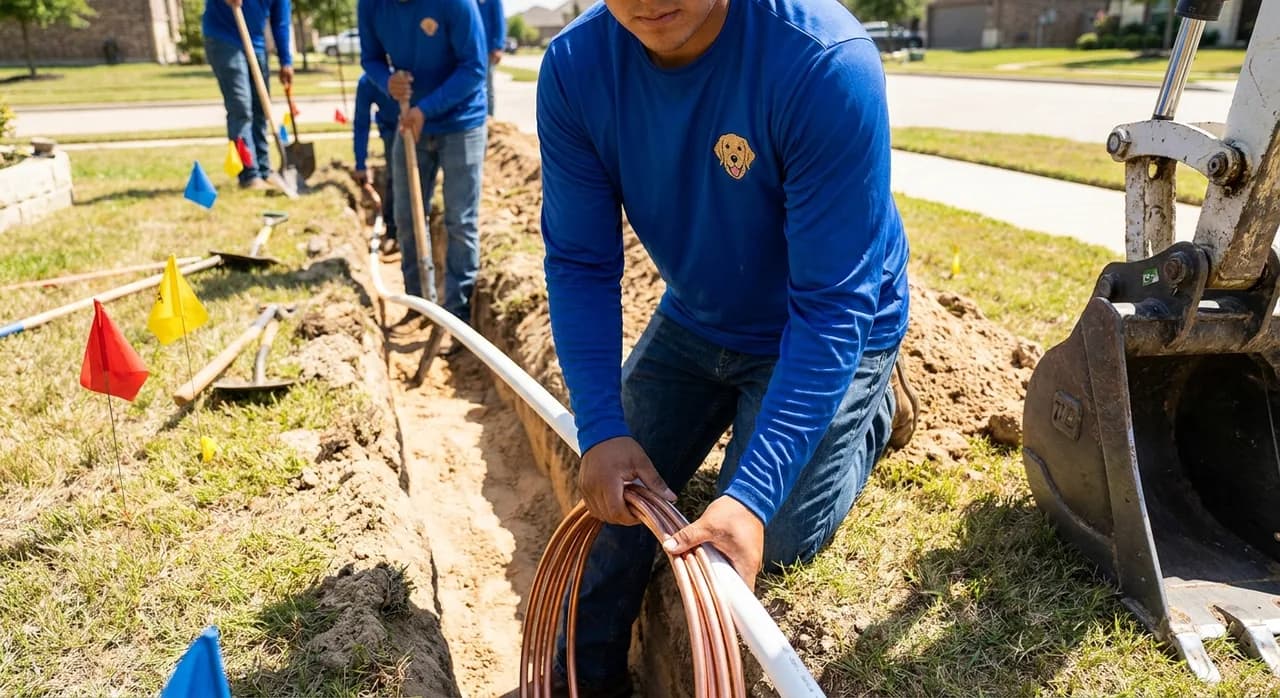
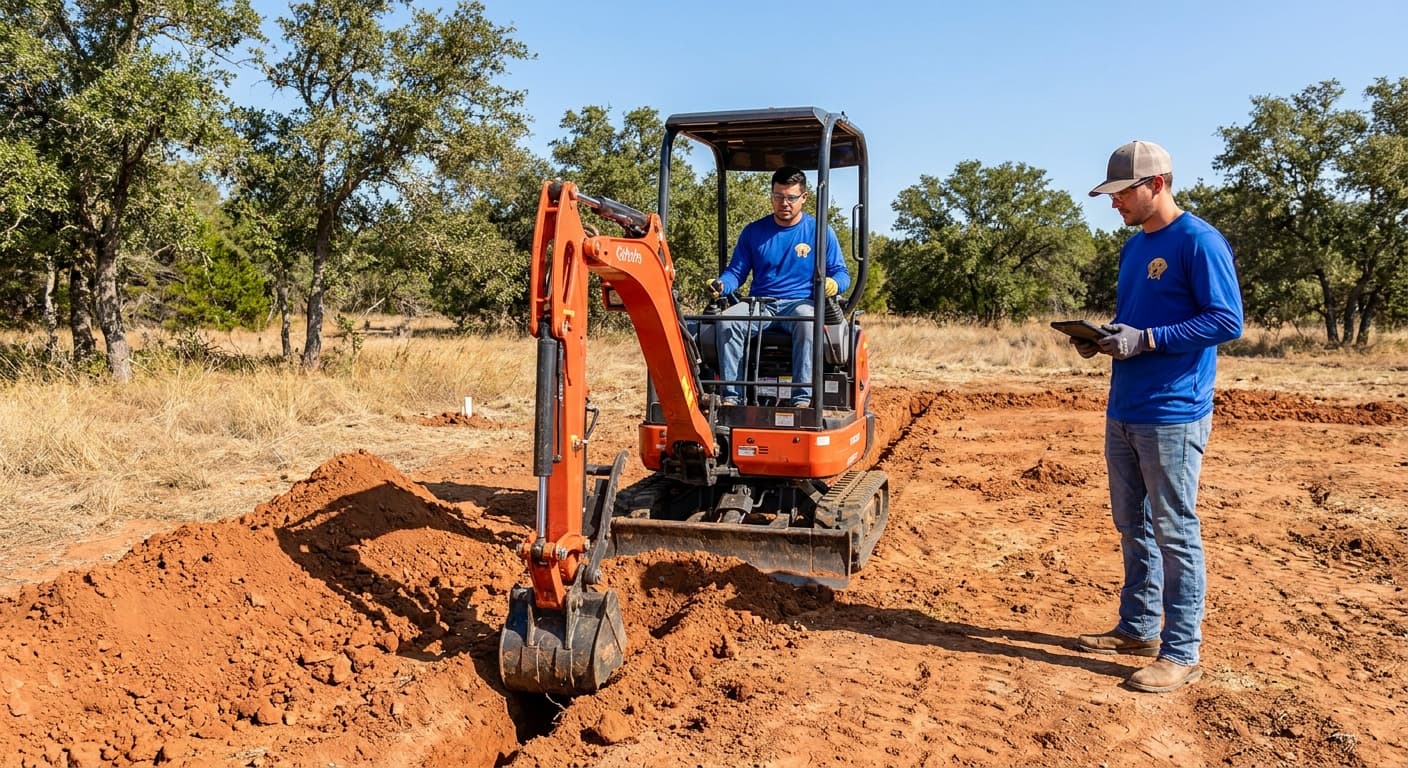
Excavation is the phase where a project gets made or broken. Wrong depth, wrong width, uncompacted spoils backfilled into a trench — every one of those shows up later as a settled slab, a cracked footing, or a utility that has to be dug back up. We run mini excavators, full-size excavators, and skidsteers depending on access and dirt volume, and we treat the dig like the structural work it is. Foundation and footing excavation is cut to engineer's depth and width, with sides plumb where soil holds and benched or shored where it doesn't. Pool digs are shot from the layout stakes and walked with the pool builder before the bond beam goes in. Utility trenches are cut to the depth required by code — 18 inches for low-voltage, 24 inches for water and sewer, deeper where freeze or load demands it — and bedded properly. Spoils management is half the job on a tight San Antonio lot. We stage on plywood or geotextile, haul off what won't be reused, and protect drives and turf with mats. 811 locates are pulled on every dig that touches subgrade. No exceptions.
What's included
- 811 locate ticket and utility mark verification
- Layout staking from engineer or surveyor plans
- Mini, midi, or full-size excavator selection per access
- Cut to engineered depth, width, and side slope
- Spoils staging, hauling, or stockpiling for backfill
- Trench shoring or benching where soil requires
- Dewatering with pumps where groundwater is present
- Backfill, compaction, and surface restoration
Materials & techniques
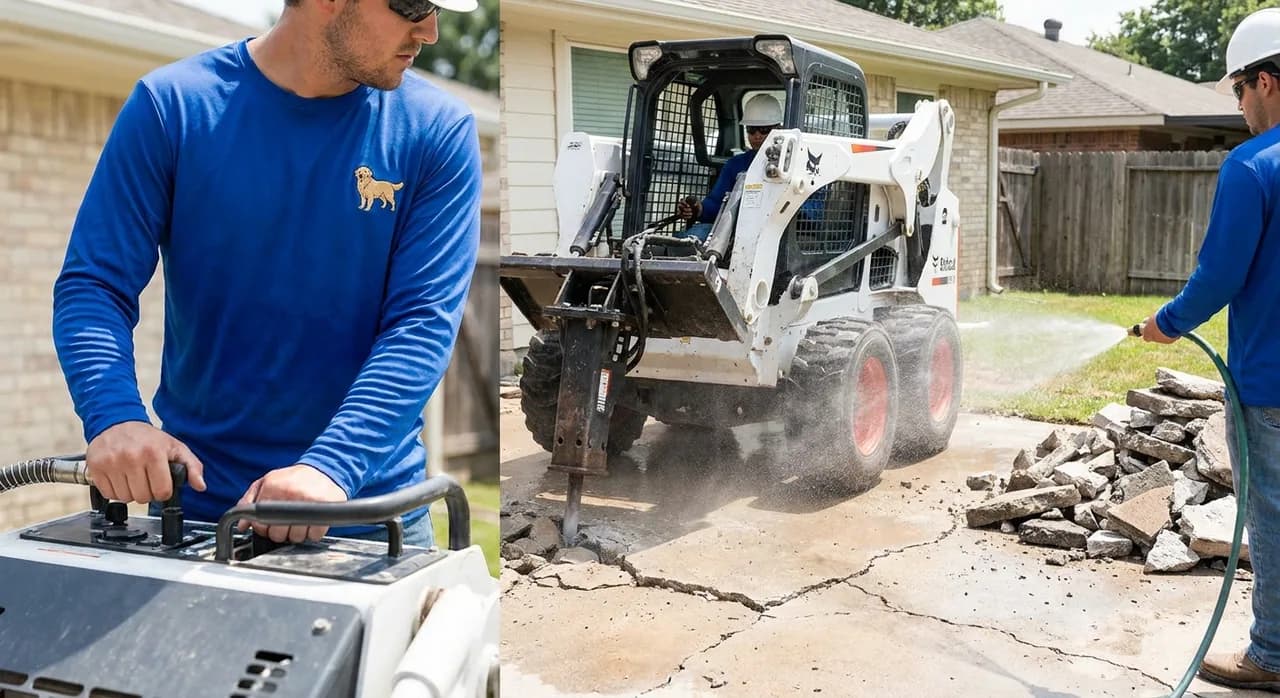
Equipment match is everything on excavation. A 3-ton mini excavator fits through a 4-foot gate and digs to 8 feet; a 12-ton machine moves volume on open lots but won't see the back yard. We pick by access first, then volume. San Antonio soils run from sandy loam in the south to expansive clay and shallow caliche in the Hill Country — caliche means breaker attachments or rock saws, clay means watching for swell during backfill. Trench shoring follows OSHA Type A, B, or C soil class — anything over 5 feet deep gets a trench box or benched sides, no shortcuts. Backfill compaction targets 95% Standard Proctor under structural areas, 90% under landscape, verified with a nuclear density gauge on critical work.
How the project runs
- 1
Locates and Layout
Pull 811 ticket 48 hours ahead, confirm marks on the ground, set layout stakes from plans. Verify with engineer or surveyor if grades or property lines are tight.
- 2
Access and Protection
Lay mats or plywood across drives and turf, set silt fence on the down-grade side, stage spoils on geotextile. Confirm haul route and disposal site for export soil.
- 3
Cut and Verify
Excavate to plan depth and width, shoot grade with laser or rotary level at each lift, bench or shore sides per OSHA soil class. Walk the cut with the engineer or builder before backfill.
- 4
Backfill and Compact
Bed with sand or specified material, backfill in 6-8 inch lifts, compact each lift with a jumping jack or plate to spec density. Restore surface — sod, gravel, or concrete patch.
Frequently asked questions
Do you call 811 or do I?
We pull the locate ticket on every dig. The homeowner can call ahead if they want, but the contractor doing the work is the one legally responsible for confirming marks before breaking ground.
How deep can your equipment dig?
Mini excavator gets to 8-10 feet, midi to 12-14, full-size to 18-22. Beyond that we bring in a long-stick machine or stage the dig in lifts with shoring.
What if you hit caliche or rock?
We switch to a hydraulic breaker or rock saw. Caliche is common in north Bexar and the Hill Country — we quote a rock contingency on those zip codes and only bill it if we actually hit it.
Do you handle the spoils, or do I?
We do. Reusable fill stays on site if you want it, the rest hauls to a licensed dirt yard. Contaminated or rocky spoils go to the correct disposal facility — we don't dump fill on neighboring lots.
Can you work in a tight back yard?
Yes. A 3-ton mini fits through a 36-40 inch gate with the bucket off. For tighter access we walk the machine in with mats or bring in a compact track loader and dig in stages.
Why hire us for excavation
In-house crew
Design, build, irrigation, and maintenance all run under one roof — no subbing out, no juggling vendors. You get one project manager from sketch through final walk-through.
San Antonio specialists
Built for South-Central Texas — heavy clay, caliche, long dry summers, and flash rain. Our designs and installs are tuned to what survives and looks good locally.
Clear pricing
No surprise line items. We size the work after a quick conversation or site visit and issue a written quote with materials and labor broken out so you can compare apples to apples.