Services
Site Utilities & Underground
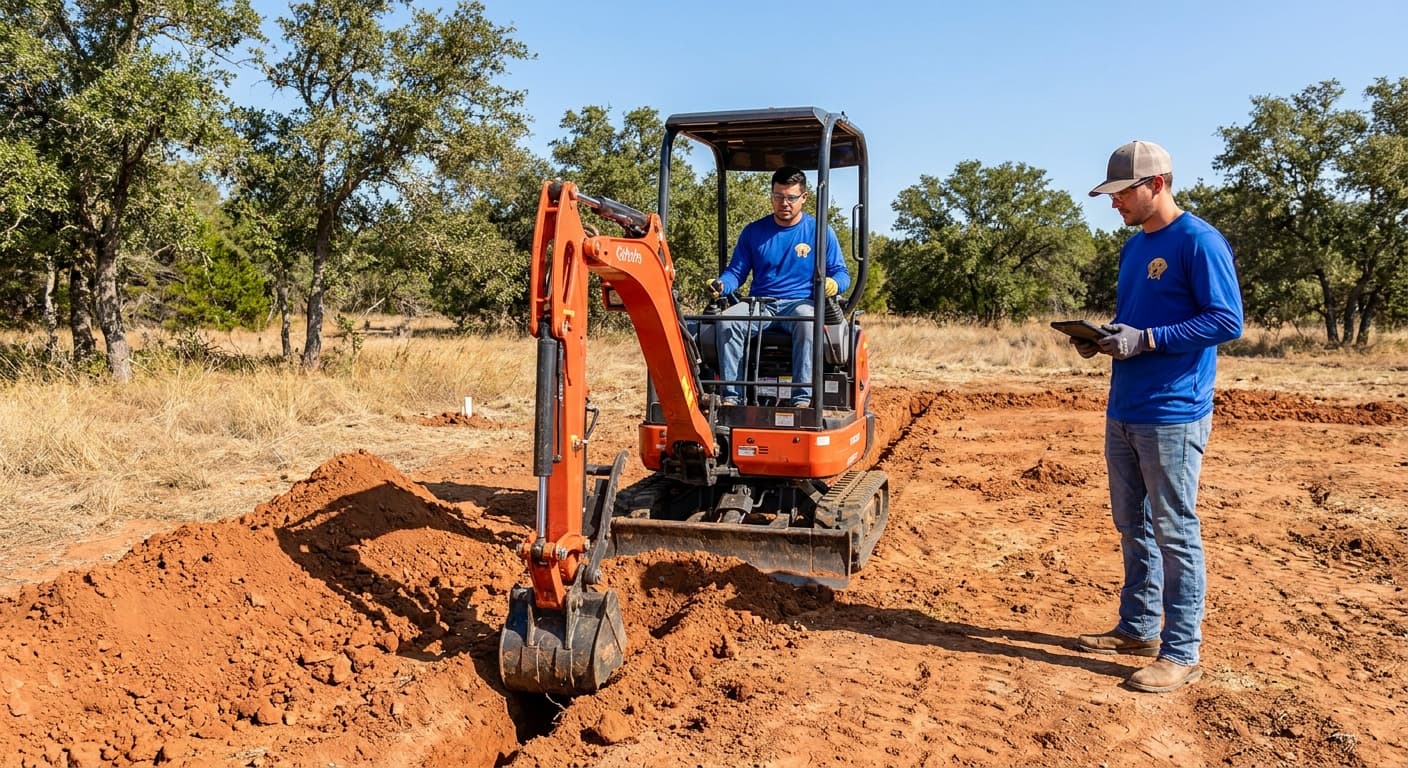
Underground utility work — water, sewer, gas, and electrical conduit trenching and tie-ins for additions, ADUs, outdoor kitchens, and pool builds. Locates pulled, depths to code, sand bedding and proper backfill, and turf restored cleanly at the surface.
Pricing varies by site. Final scope, materials, and access influence the all-in number — we'll quote your specific project after a quick conversation.
About our site utilities & underground work
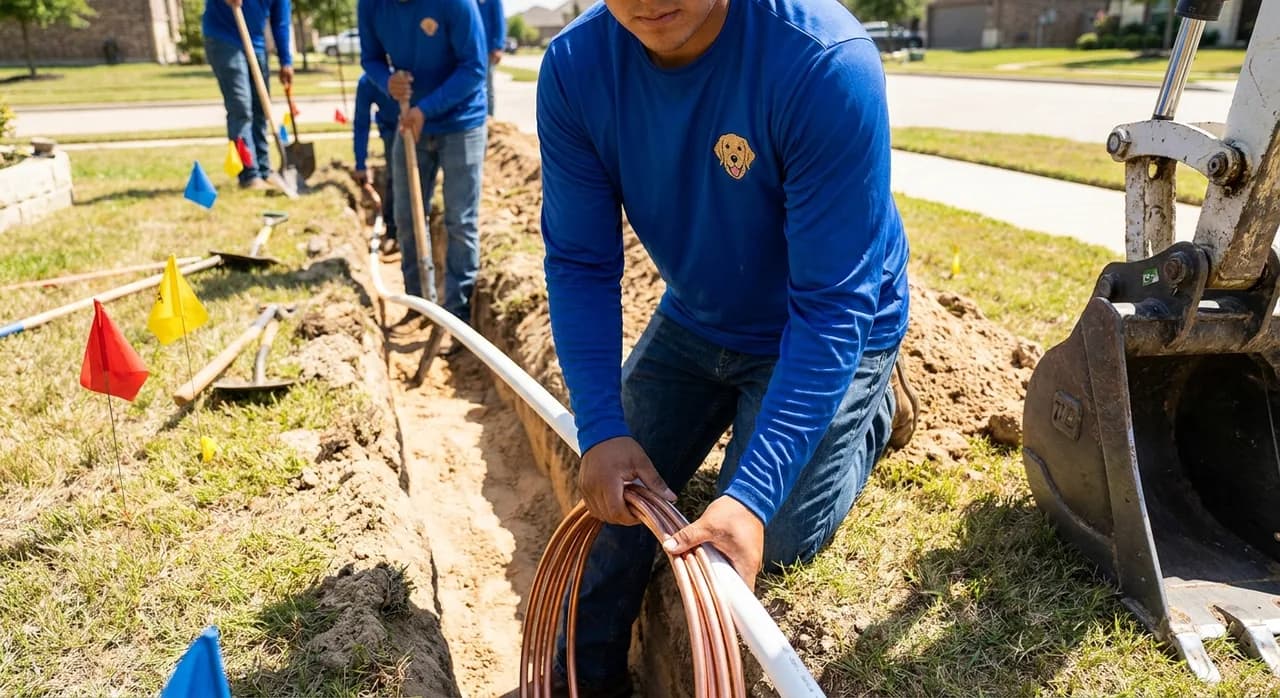
Site utilities are the buried infrastructure that makes a build work — water service, sewer laterals, gas lines, electrical conduit, irrigation mains, and low-voltage runs. Get the depth wrong and the line freezes or fails inspection. Get the bedding wrong and the pipe settles, cracks, or shears at a joint. Get the locates wrong and someone hits a live gas main. None of that is acceptable, and none of it happens on our jobs. We handle utility trenching and tie-ins for room additions, ADUs and casitas, outdoor kitchens, pool builds, and detached structures. Every dig starts with an 811 locate ticket and verified marks on the ground. Trenches go to code depth — 12 inches for irrigation, 18 for low-voltage, 24 for water and sewer, deeper where freeze or vehicle load demands. Sand bedding under and over the pipe, warning tape at 12 inches above, and compacted backfill in lifts. Tie-ins to SAWS water and sewer, CPS Energy gas, and electrical service follow utility-company standards. We coordinate inspections, pressure-test where required, and restore turf, hardscape, or driveway cleanly so the surface looks like nothing was ever cut.
What's included
- 811 locate ticket and field verification
- Trenching to code depth with proper width
- Sand bedding under and over the pipe
- Warning tape buried 12 inches above utilities
- Tie-ins to SAWS, CPS Energy, and electrical service
- Pressure testing and inspection coordination
- Conduit pull-strings and tracer wire where required
- Compacted backfill and surface restoration
Materials & techniques
Pipe and conduit selection follows code and utility. SAWS-approved Schedule 40 PVC or copper for water service, SDR-35 PVC for sewer, polyethylene for natural gas with the right tracer wire, Schedule 40 or 80 PVC for electrical conduit depending on depth and exposure. Sand bedding is washed concrete sand or pea gravel — never native clay, which holds moisture against the pipe and can carry sharp rock. Tracer wire is mandatory on every non-metallic line, brought up at every valve box and termination so future locates actually find the line. Sewer slopes hit 1/4 inch per foot minimum on 4-inch line, 1/8 inch on 6-inch. Pressure tests run at 150 psi for water service for 15 minutes minimum before any backfill.
How the project runs
- 1
Plan and Locate
Confirm utility routes against plans, pull 811 ticket 48 hours ahead, verify field marks. Coordinate with SAWS or CPS Energy for any tie-in to public service.
- 2
Trench
Cut to code depth and proper width — usually 12-18 inches wide for a single line, more for parallel runs. Spoil pile stages on geotextile away from the trench edge for OSHA setback.
- 3
Bed and Lay
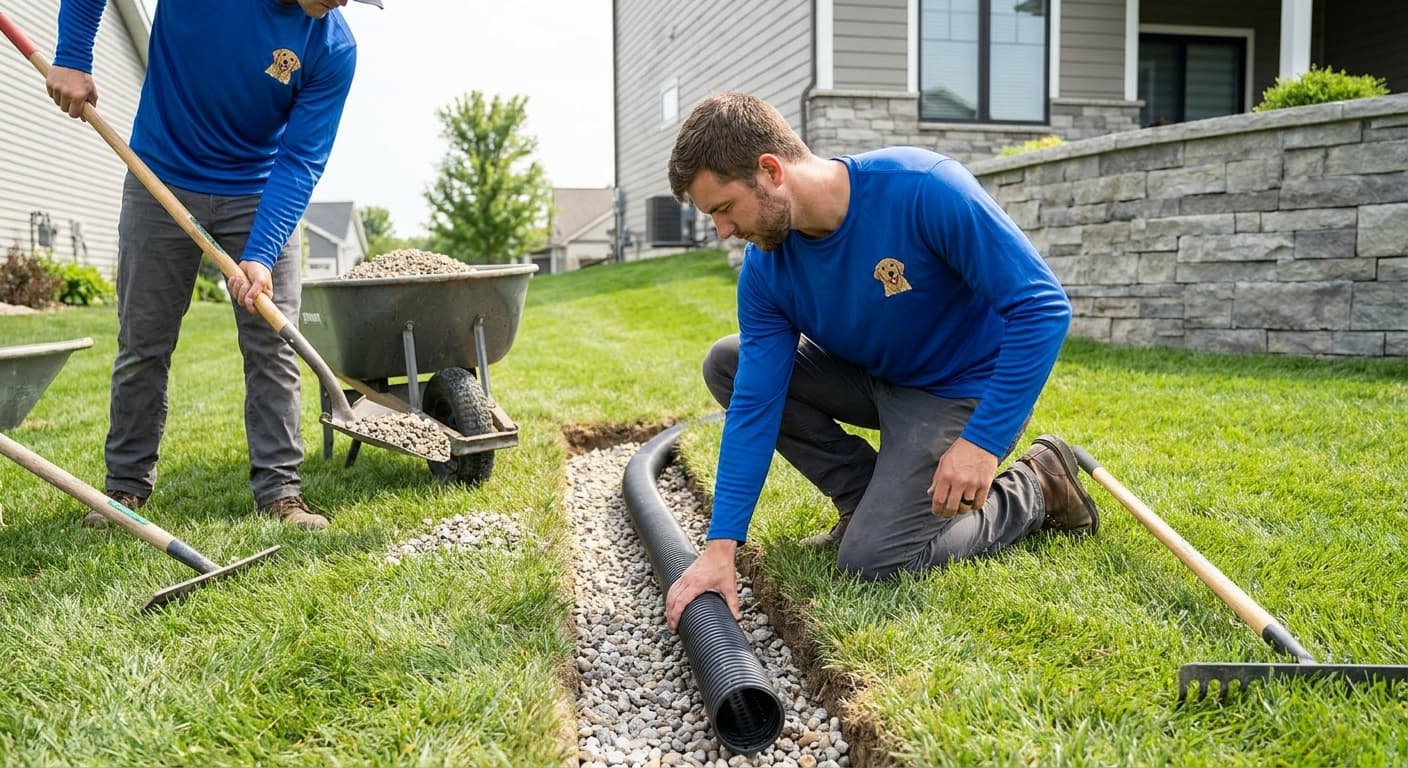
Place 4-6 inches of clean sand bedding, lay pipe or conduit to grade with proper slope on sewer, glue or fuse joints, set tracer wire on plastic lines, cap ends until tie-in.
- 4
Test, Backfill, Restore
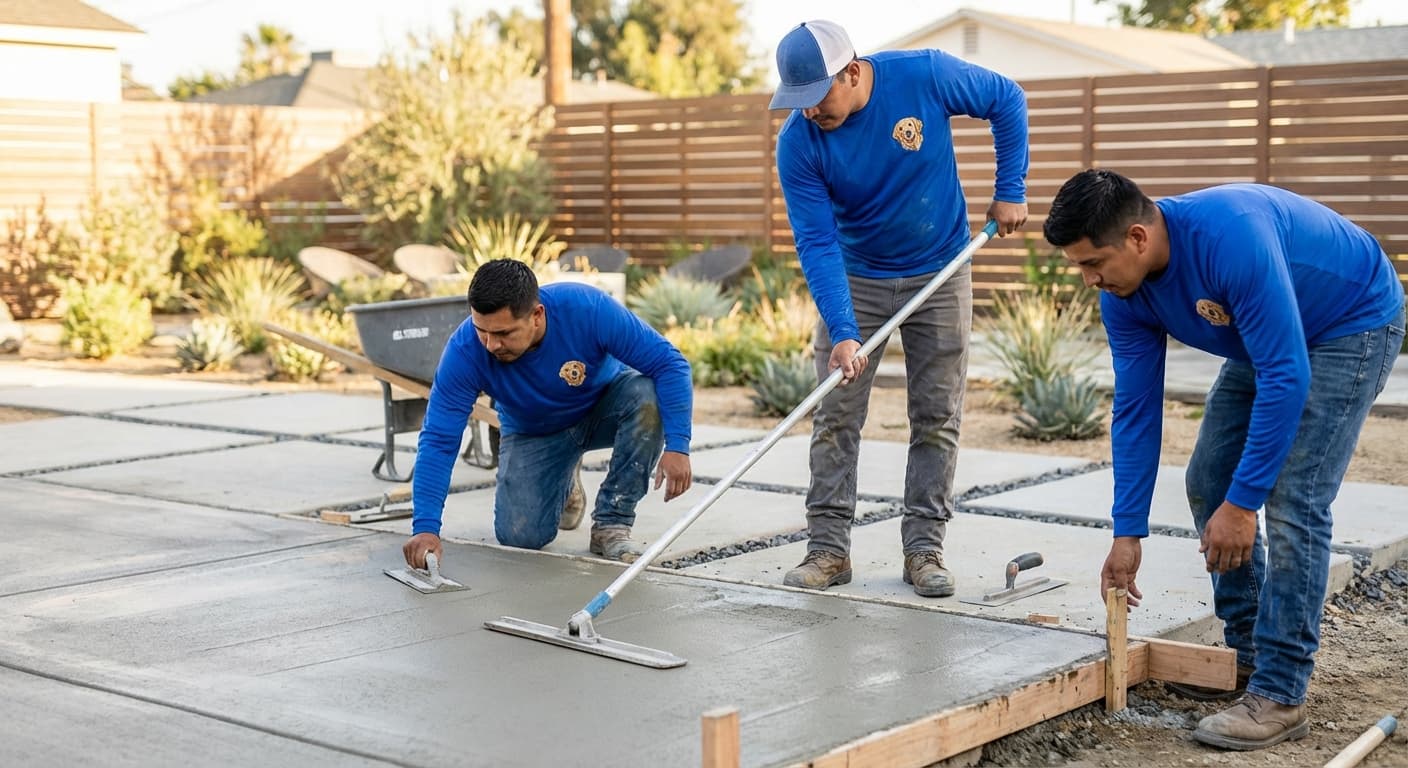
Pressure-test water lines, vacuum-test sewer where required, get inspections signed. Backfill in 6-8 inch lifts with compaction, restore turf or hardscape so the cut disappears.
Frequently asked questions
Do you tie into the city water and sewer, or just stub it?
We do both. Tie-ins to SAWS mains require a licensed plumber and a city inspection — we coordinate the tap and handle the trench work from the meter or cleanout to the structure.
How deep does electrical conduit need to be?
Eighteen inches for low-voltage and most service runs in Schedule 40 PVC, deeper under driveways or where vehicle load applies. Tracer wire on every plastic run so it can be located later.
Can you trench through my yard without destroying the turf?
Mostly, yes. We cut a narrow trench, save the sod strip on geotextile, and replace it after backfill. Wider trenches need fresh sod, which we include in the scope when the cut requires it.
What about hitting an existing line?
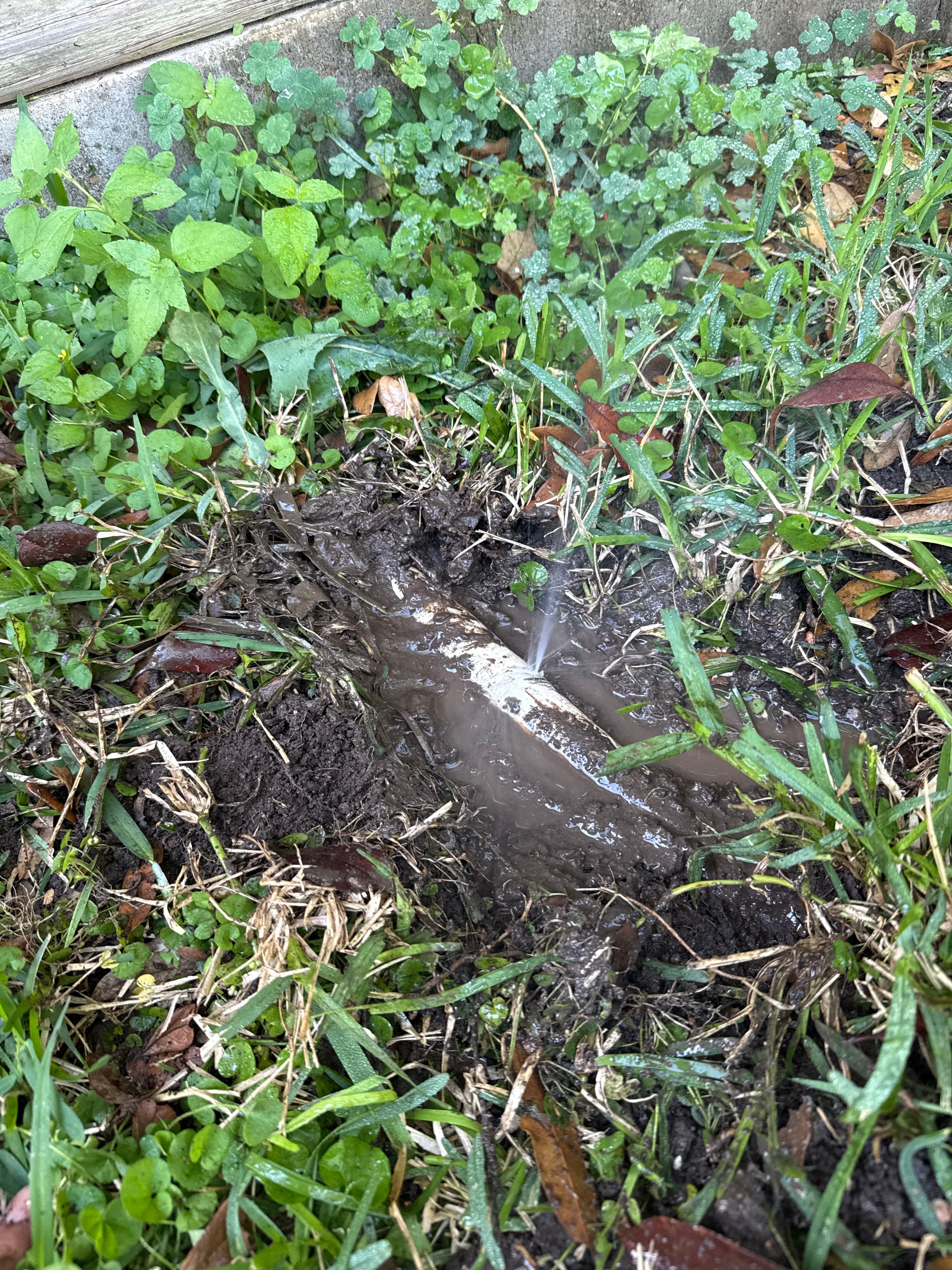
811 locates catch the public-side lines. Private side — irrigation, low-voltage, propane — we hand-dig the first 18 inches near anything marked, and we use a ground-penetrating locator on critical work.
Do you handle the inspections?
Yes. We schedule inspections with the city or utility, meet the inspector on site, and don't backfill until the inspection is signed off. Closing up an uninspected trench is how problems get hidden until they're expensive.
Why hire us for site utilities & underground
In-house crew
Design, build, irrigation, and maintenance all run under one roof — no subbing out, no juggling vendors. You get one project manager from sketch through final walk-through.
San Antonio specialists
Built for South-Central Texas — heavy clay, caliche, long dry summers, and flash rain. Our designs and installs are tuned to what survives and looks good locally.
Clear pricing
No surprise line items. We size the work after a quick conversation or site visit and issue a written quote with materials and labor broken out so you can compare apples to apples.