Services
Grading
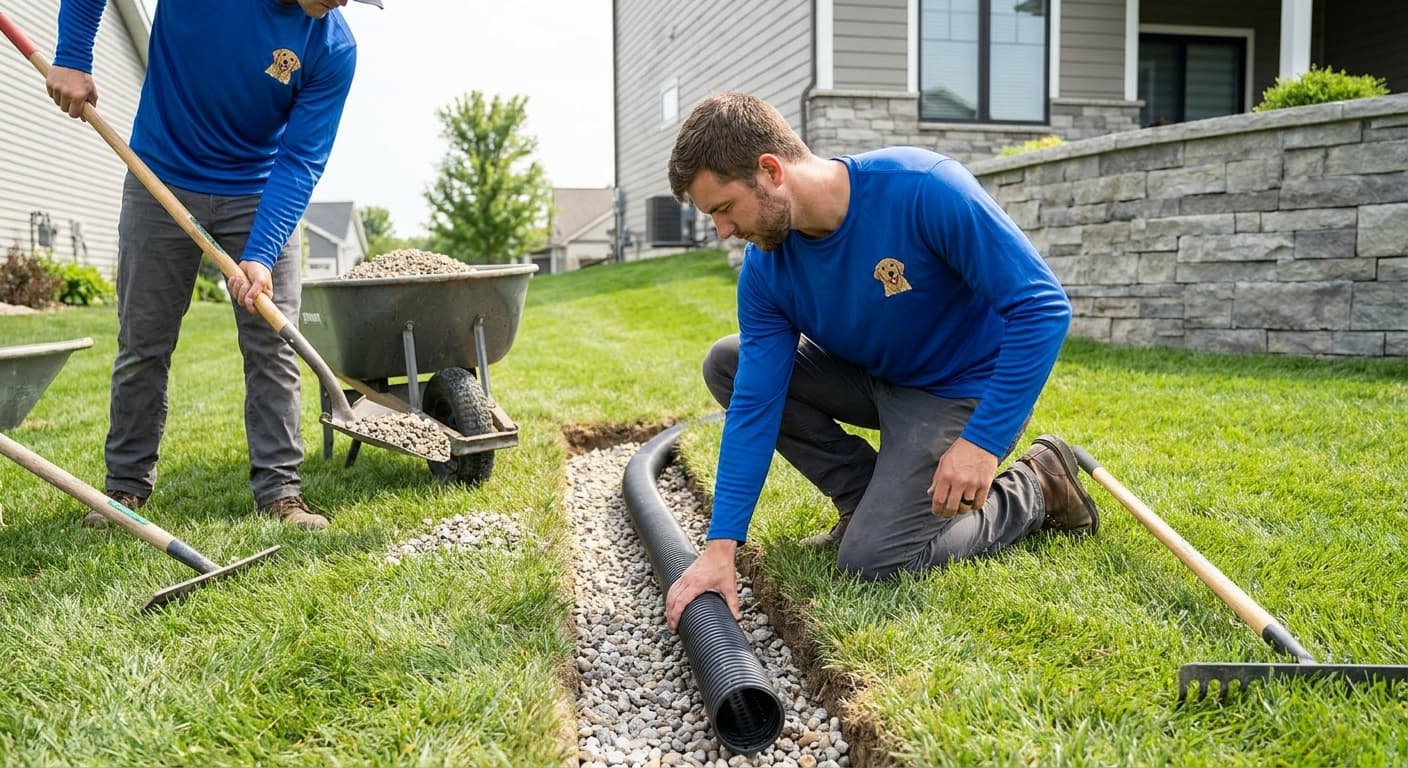
Rough and final grading to establish proper slope, drainage, and a stable surface. Laser-guided cuts and fills ensure water moves away from structures and your project — sod, concrete, patio, or foundation — starts truly level and ready to build.
Pricing varies by site. Final scope, materials, and access influence the all-in number — we'll quote your specific project after a quick conversation.
About our grading work
Grading is the difference between a yard that drains and a slab that cracks. Every patio, sod install, foundation, and driveway sits on a graded subsurface — get the slope wrong and water finds the building, the turf drowns, or the concrete settles unevenly within a season. We do both rough grading after clearing or excavation and final grading right before sod, hardscape, or pour. Laser-guided machine grading sets the cuts and fills, hand-grading finishes the tolerances. Standard tolerance for landscape and sod is +/- 0.10 feet over 10 feet, with positive slope away from any structure at 5% minimum for the first 10 feet. Concrete and foundation subgrade tightens to +/- 0.05 feet, with subgrade compaction verified to 95% Standard Proctor before any base goes down. San Antonio clay needs special handling — wet clay grades like putty and rebounds when it dries. We grade dry where possible, moisture-condition the fill where we have to work in it, and compact in lifts. The goal is a stable, properly sloped subgrade that will hold the design grade for the life of whatever sits on top of it.
What's included
- Laser level or GPS rover for grade verification
- Rough grade cuts and fills with skidsteer or dozer
- Final hand-grading to design tolerance
- Subgrade compaction with plate or jumping jack
- Positive slope away from structures — 5% for 10 feet
- Import or export fill as the design requires
- Erosion controls during open-soil phases
- Coordination with sod, hardscape, or concrete crews
Materials & techniques
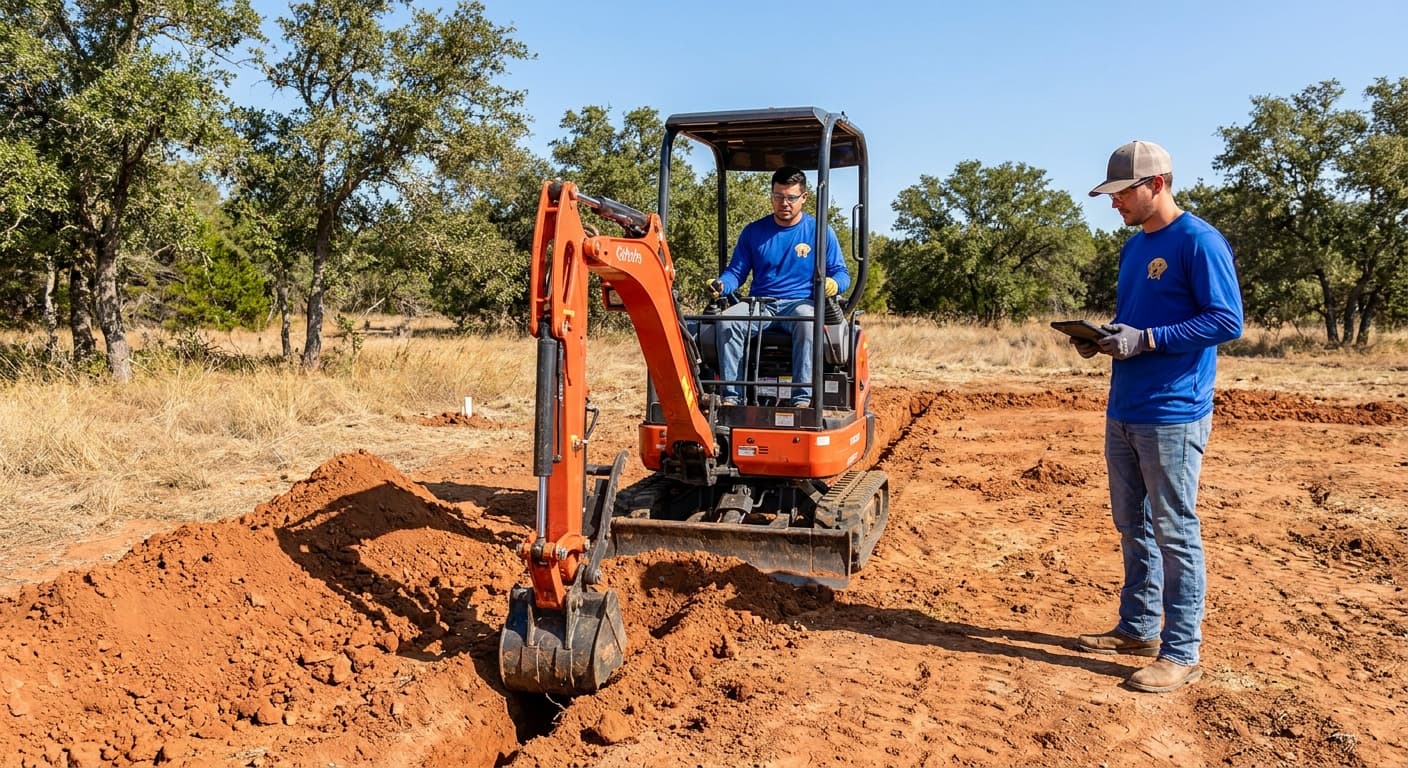
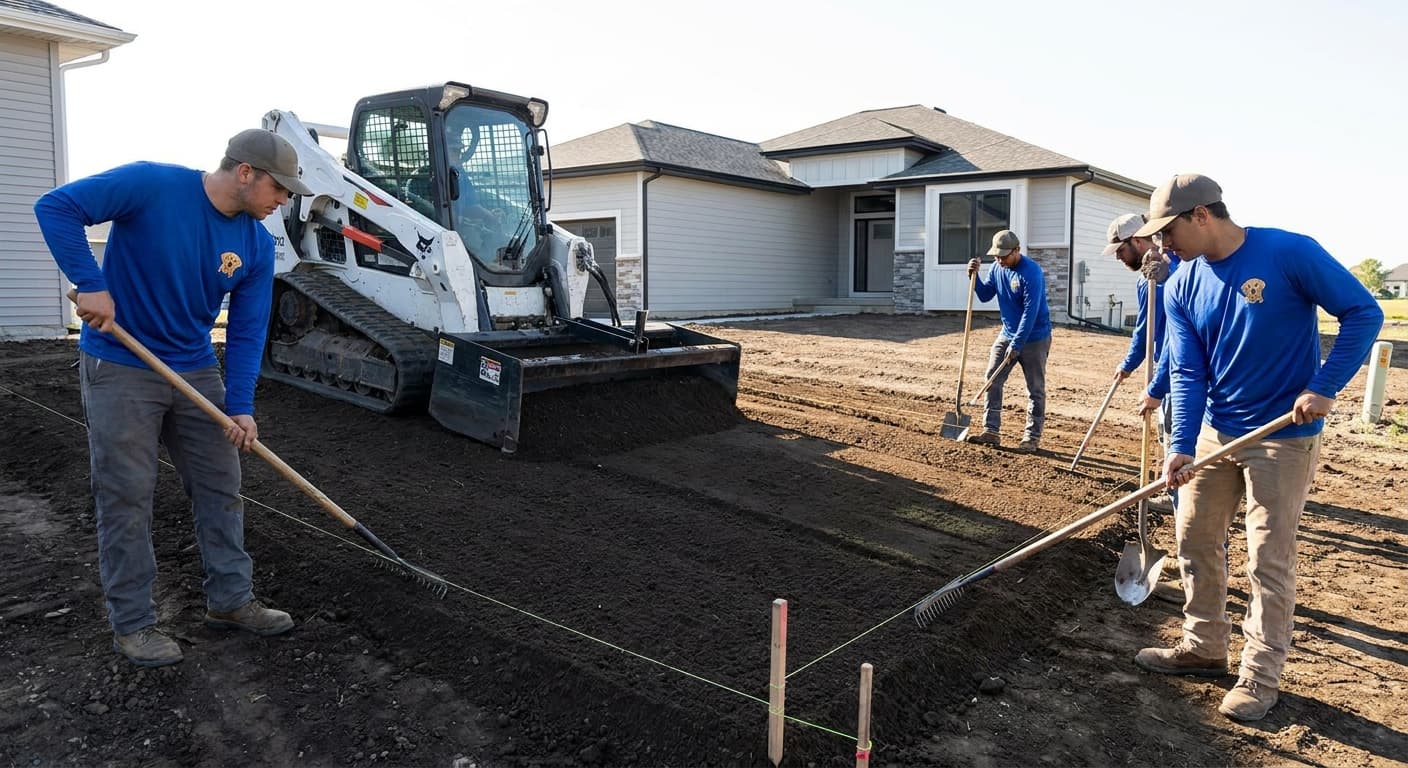
Equipment scales to the lot. A box blade on a skidsteer pulls a beautiful finish grade on a quarter-acre yard; a small dozer is faster on open acreage. We run laser receivers on the machine for rough work and switch to a rotating laser with a hand rod for final tolerances. Fill material matters — select fill, road base, or properly screened on-site soil, never debris or organic material that will rot and settle. San Antonio expansive clay gets moisture-conditioned to optimum before compaction; too dry and it won't bond, too wet and it pumps. Compaction with a vibratory plate for thin lifts and a jumping jack in trenches, targeting 90-95% density depending on what the subgrade is supporting.
How the project runs
- 1
Survey and Stake
Shoot existing grades, compare to design, mark cut and fill on the ground. Confirm finish elevations at all structures, walks, and discharge points before any dirt moves.
- 2
Rough Grade
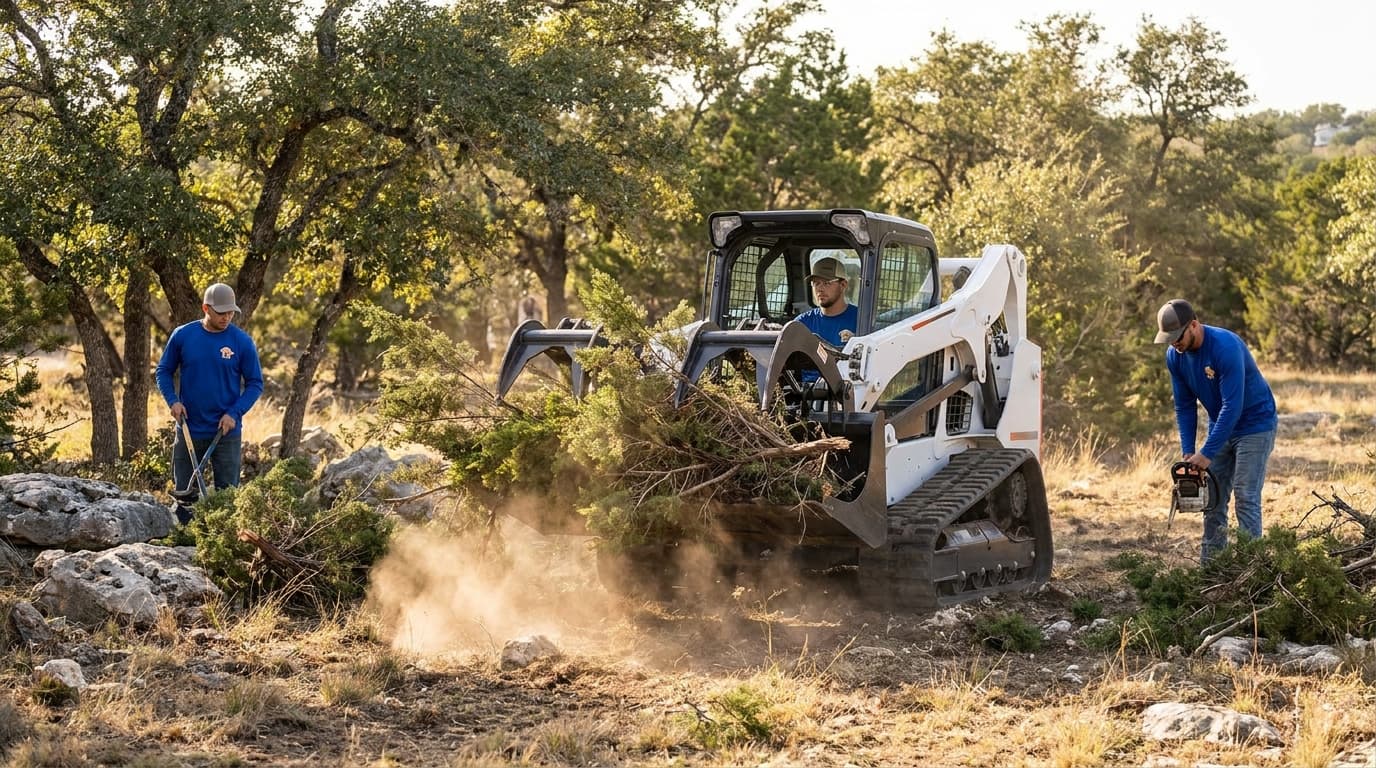
Move bulk dirt with skidsteer, track loader, or dozer. Cut high spots, fill low spots, establish primary slope to drainage. Compact fills in 6-8 inch lifts as they go in.
- 3
Fine Grade
Switch to box blade or hand work. Smooth to design tolerance, knock down any high spots, fill in any low spots, verify with laser every 10 feet across the work area.
- 4
Verify and Hand Off
Walk grade with you and the next-phase crew. Confirm tolerances at structures, discharge points, and transitions. Sign off before sod, hardscape, or concrete starts.
Frequently asked questions
What slope do I need away from my foundation?
Five percent for the first 10 feet — that's 6 inches of fall over 10 feet. After that, 2% is usually enough to keep water moving. Less than 5% near the slab is where foundation issues start.
Do you grade before or after sod is removed?
After. Existing sod and topsoil come off first, grading happens on the subgrade, and topsoil or new sod goes back on top of the corrected grade. Grading over old sod just compresses and rebounds.
How do I know if my yard needs regrading?
Water pools after a rain, you see negative slope at the foundation, or sod won't survive in a low spot. A laser level confirms it in 15 minutes — we'll shoot grades on a quote visit.
What's the tolerance for a concrete subgrade?
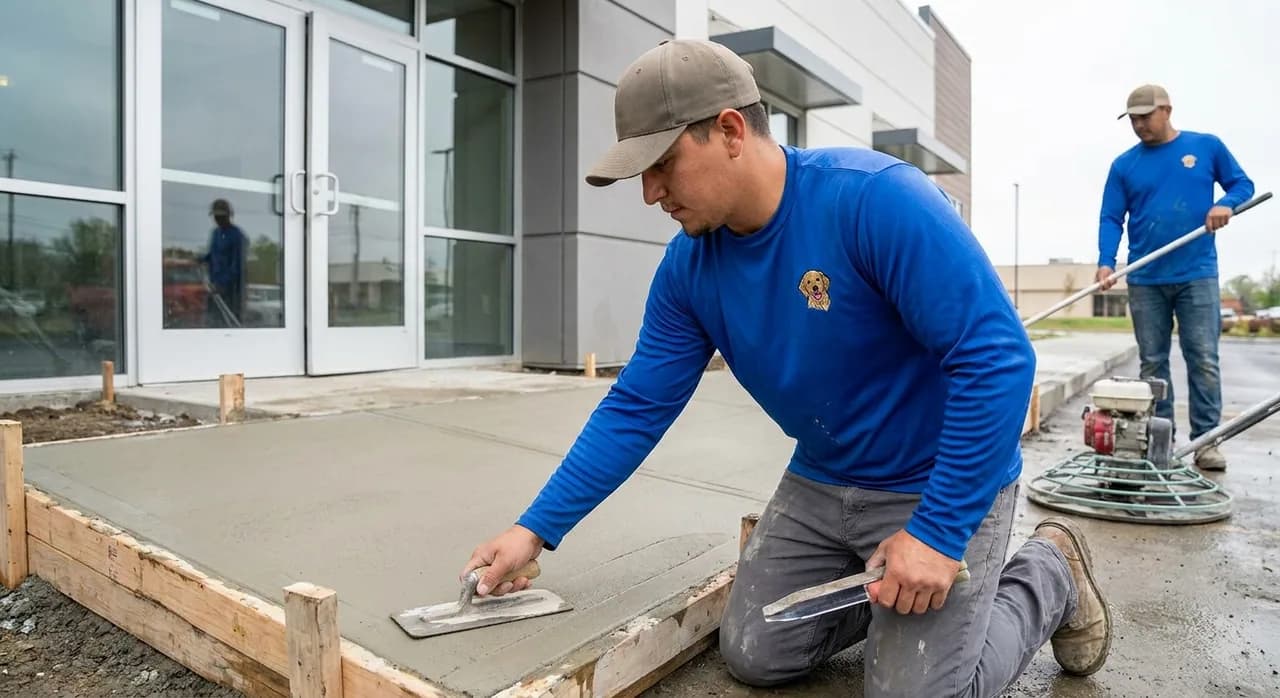
Plus or minus a quarter inch over 10 feet under a slab, with the subgrade compacted to 95% Standard Proctor. Anything looser and you'll see settlement cracks within a few seasons.
Can you bring in fill if my yard is too low?
Yes. We source select fill or road base from local yards, haul to the site, and place and compact in lifts. We don't use random dirt from a neighboring project unless it's been tested clean.
Why hire us for grading
In-house crew
Design, build, irrigation, and maintenance all run under one roof — no subbing out, no juggling vendors. You get one project manager from sketch through final walk-through.
San Antonio specialists
Built for South-Central Texas — heavy clay, caliche, long dry summers, and flash rain. Our designs and installs are tuned to what survives and looks good locally.
Clear pricing
No surprise line items. We size the work after a quick conversation or site visit and issue a written quote with materials and labor broken out so you can compare apples to apples.