Services
Hardscape
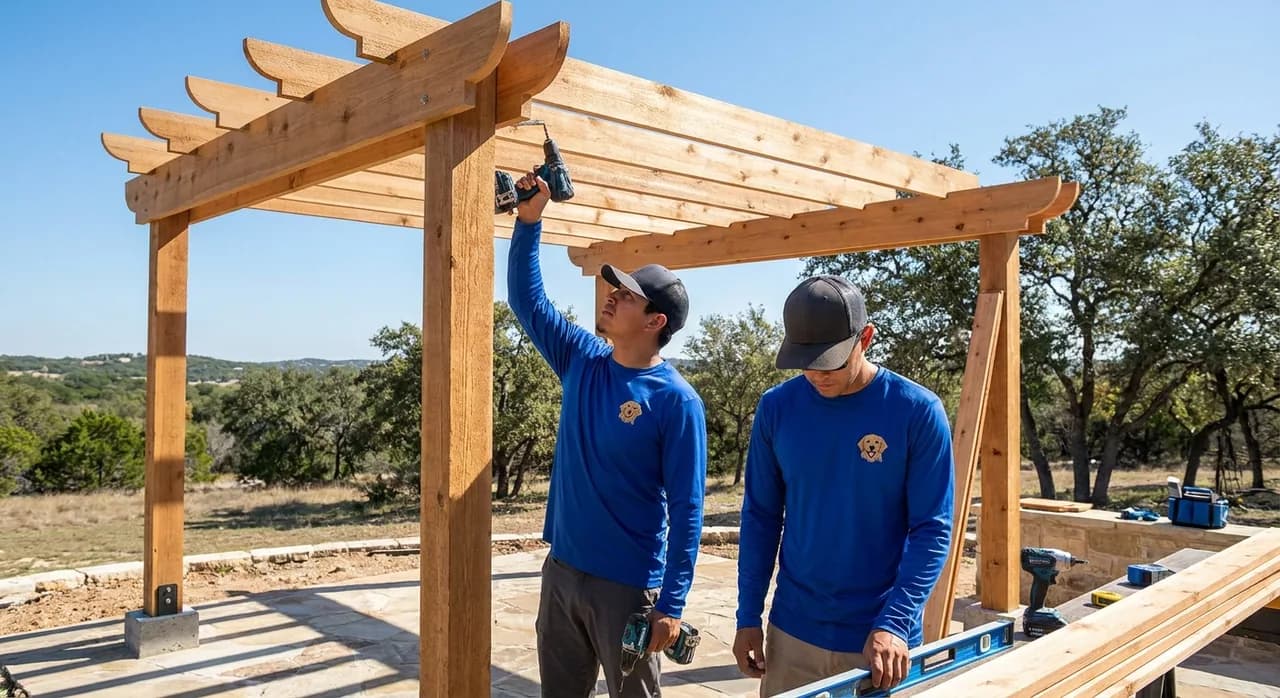
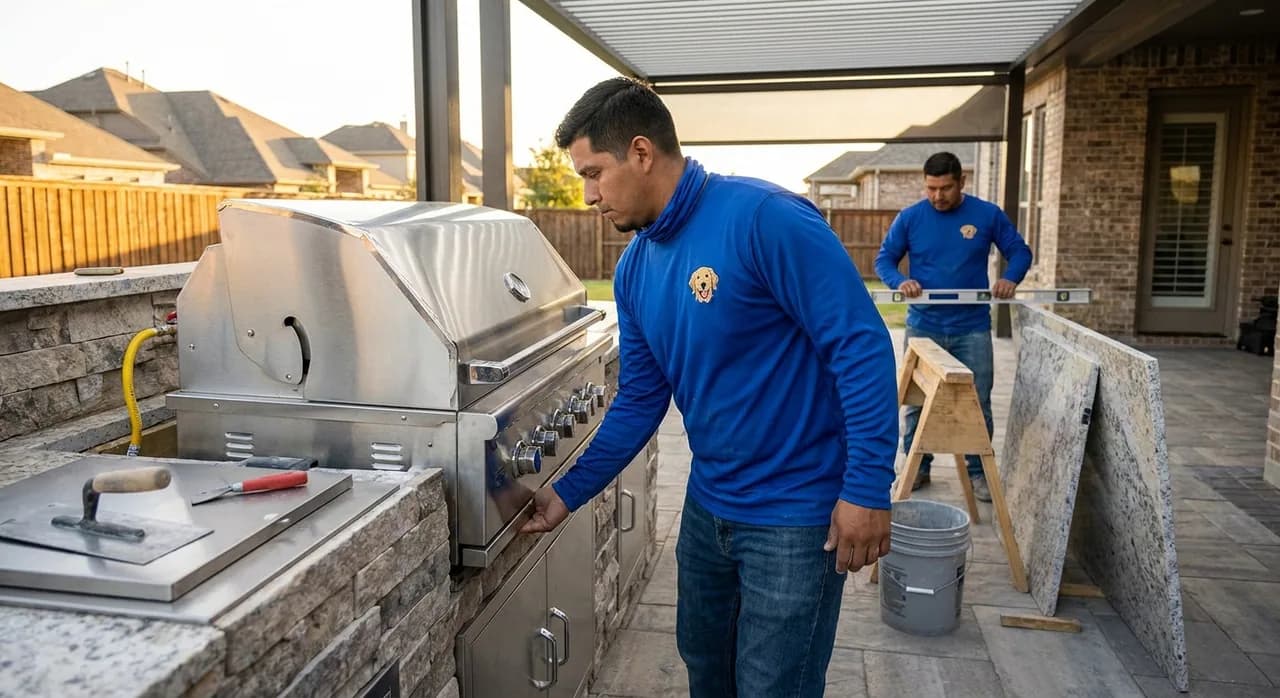
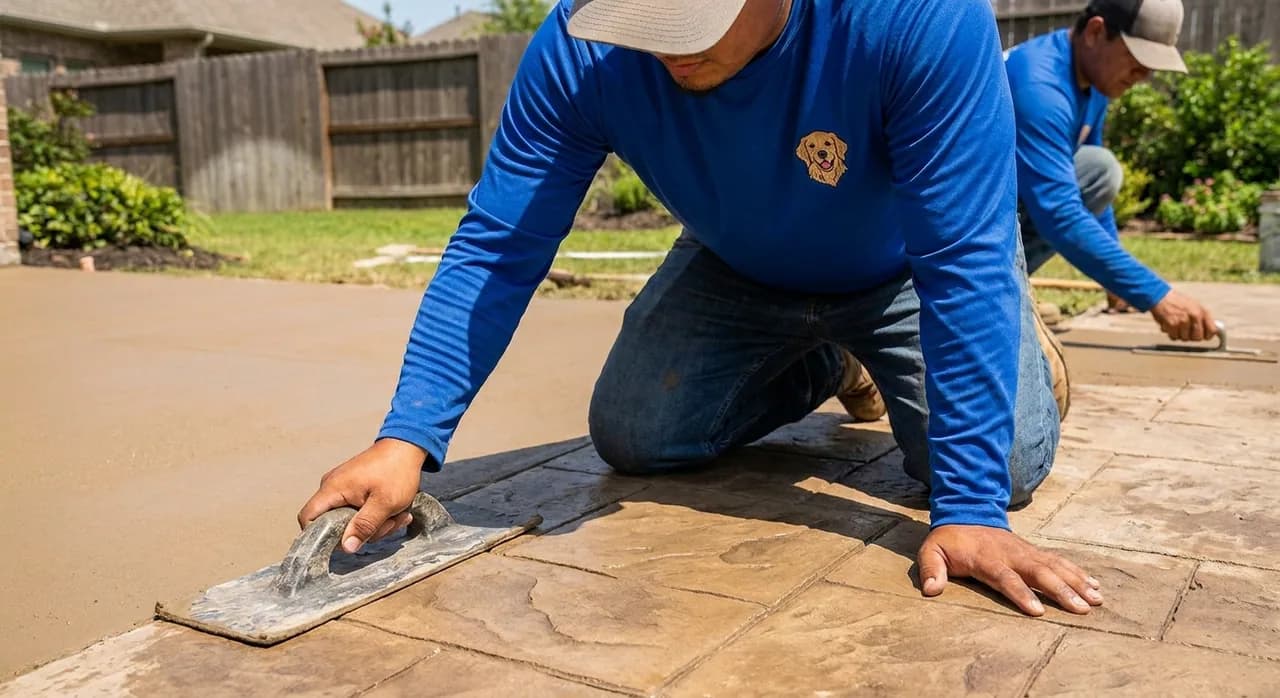
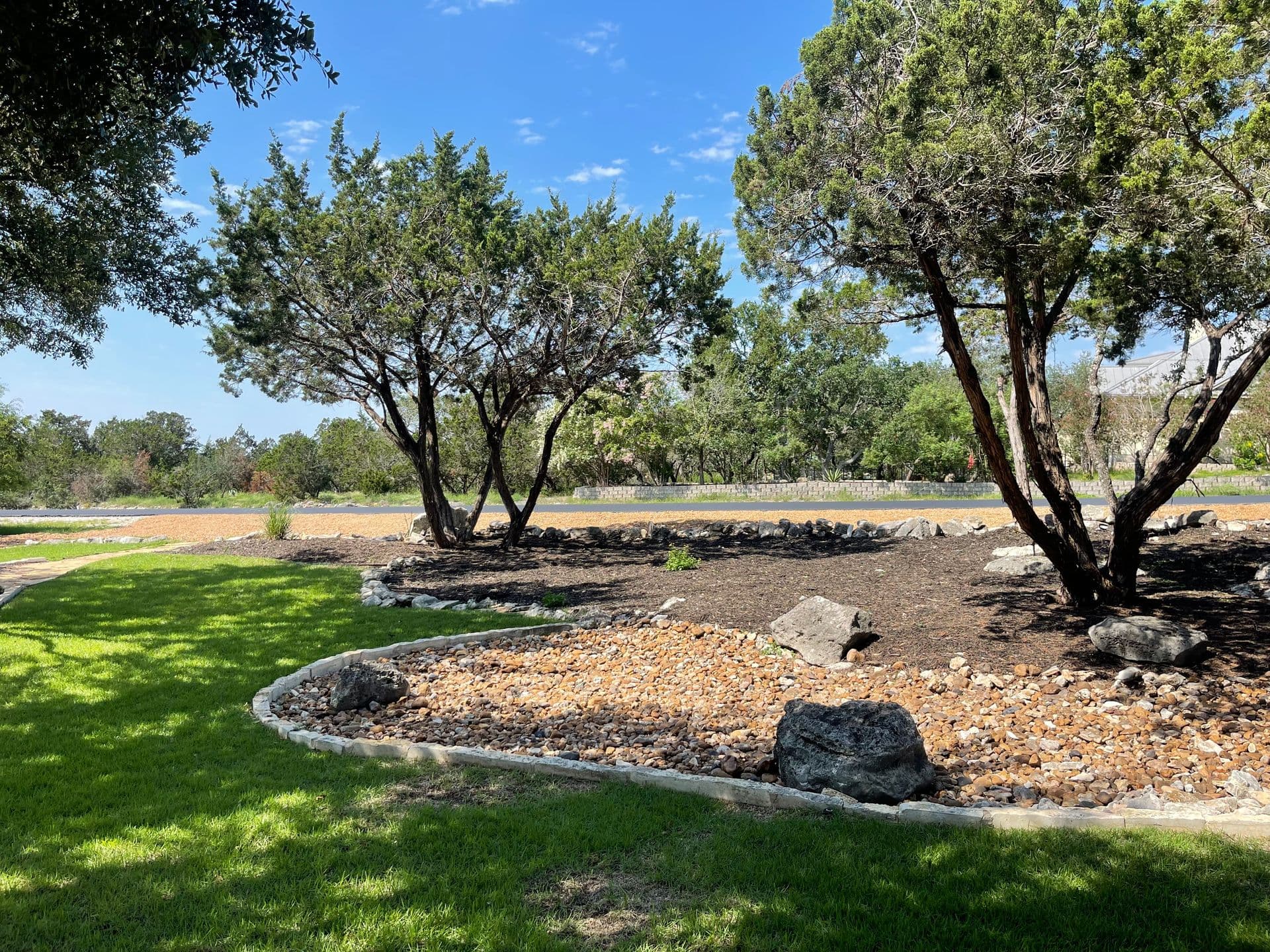
Pavers, flagstone, and natural stone — patios, walkways, retaining walls, fire pits, and outdoor kitchens. Engineered base, polymeric sand, and proper drainage built into every install. Outdoor living spaces that hold up to Texas heat and feel premium underfoot.
Pricing varies by site. Final scope, materials, and access influence the all-in number — we'll quote your specific project after a quick conversation.
About our hardscape work
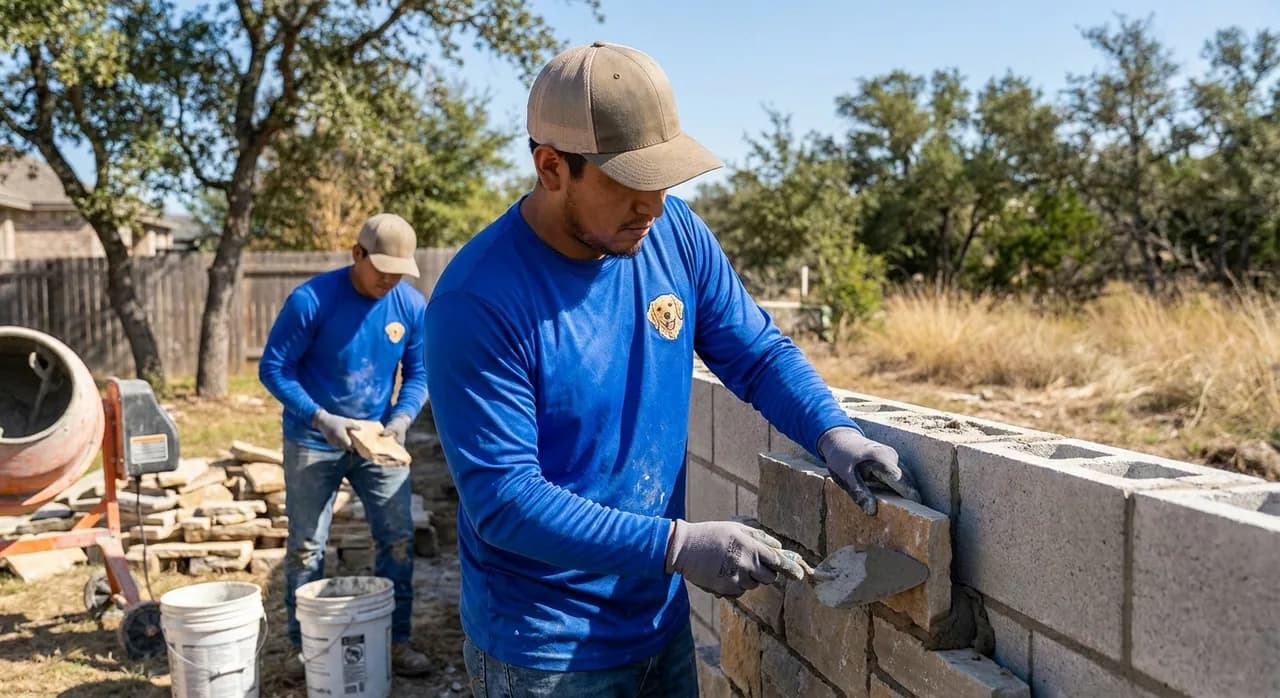
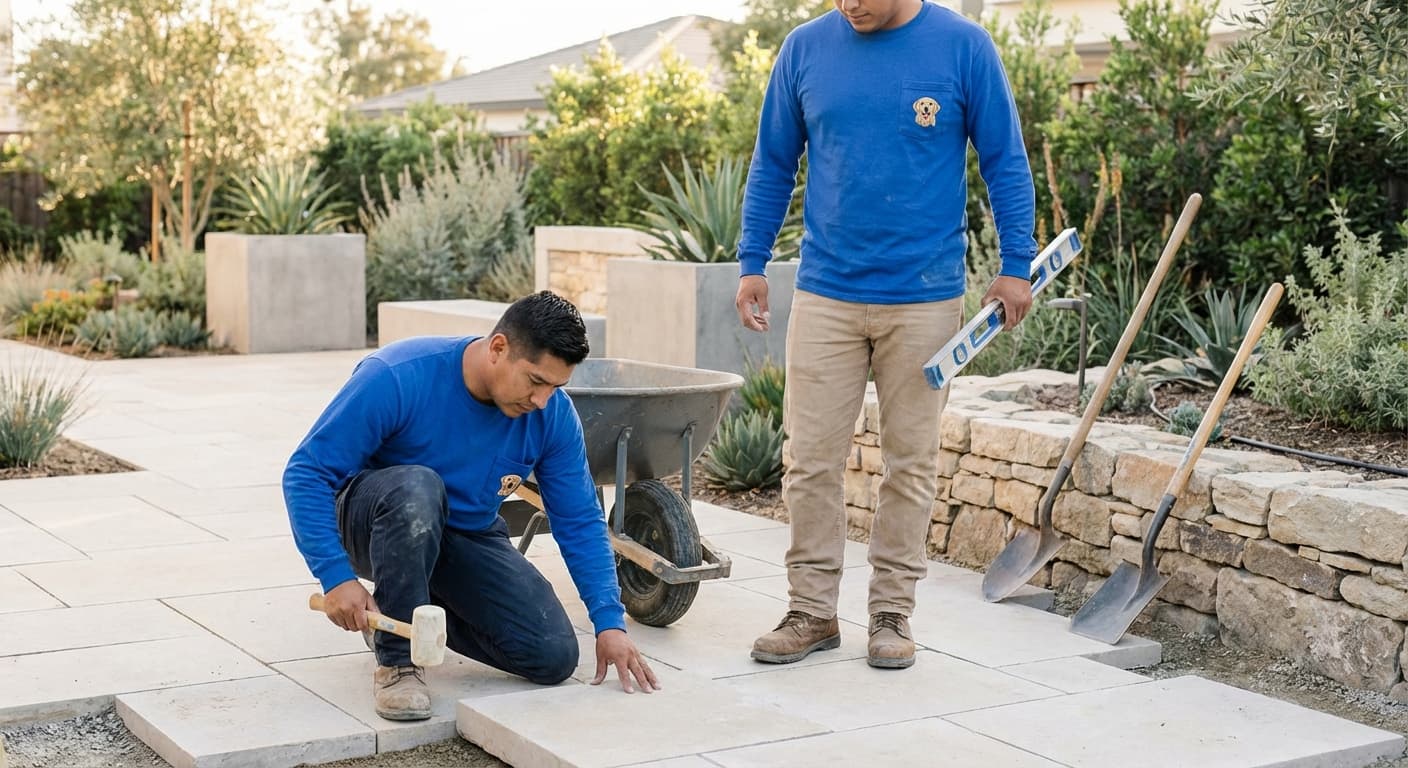
Pavers, flagstone, natural stone, and segmental block — patios, walkways, retaining walls, fire pits, and outdoor kitchens built on engineered base. The difference between hardscape that lasts 25 years and hardscape that heaves in three winters is everything you cannot see — base depth, compaction, drainage, and edge restraint. We over-build every base: 6-8 inches of mechanically compacted crushed limestone for pedestrian patios, 10-12 inches for driveways, with geotextile fabric separating base from subgrade so fines do not pump up into the aggregate. Bedding is 1 inch of washed concrete sand screeded flat — never stone dust. Joints get polymeric sand swept in dry, then activated with a fine mist to lock pavers without weeds. Retaining walls over 4 feet engage a licensed engineer and get geogrid reinforcement tied back into compacted backfill — not stacked dry. Outdoor living spaces are designed for Texas heat: lighter Oklahoma flagstone and Lueders limestone stay cool underfoot in July, while dense porcelain pavers shrug off red wine and BBQ grease.
What's included
- Engineered base — 6-12 inches of compacted crushed limestone with geotextile
- Pavers, flagstone, Lueders limestone, porcelain, or natural stone selection
- Polymeric sand joints and aluminum or spike edge restraint
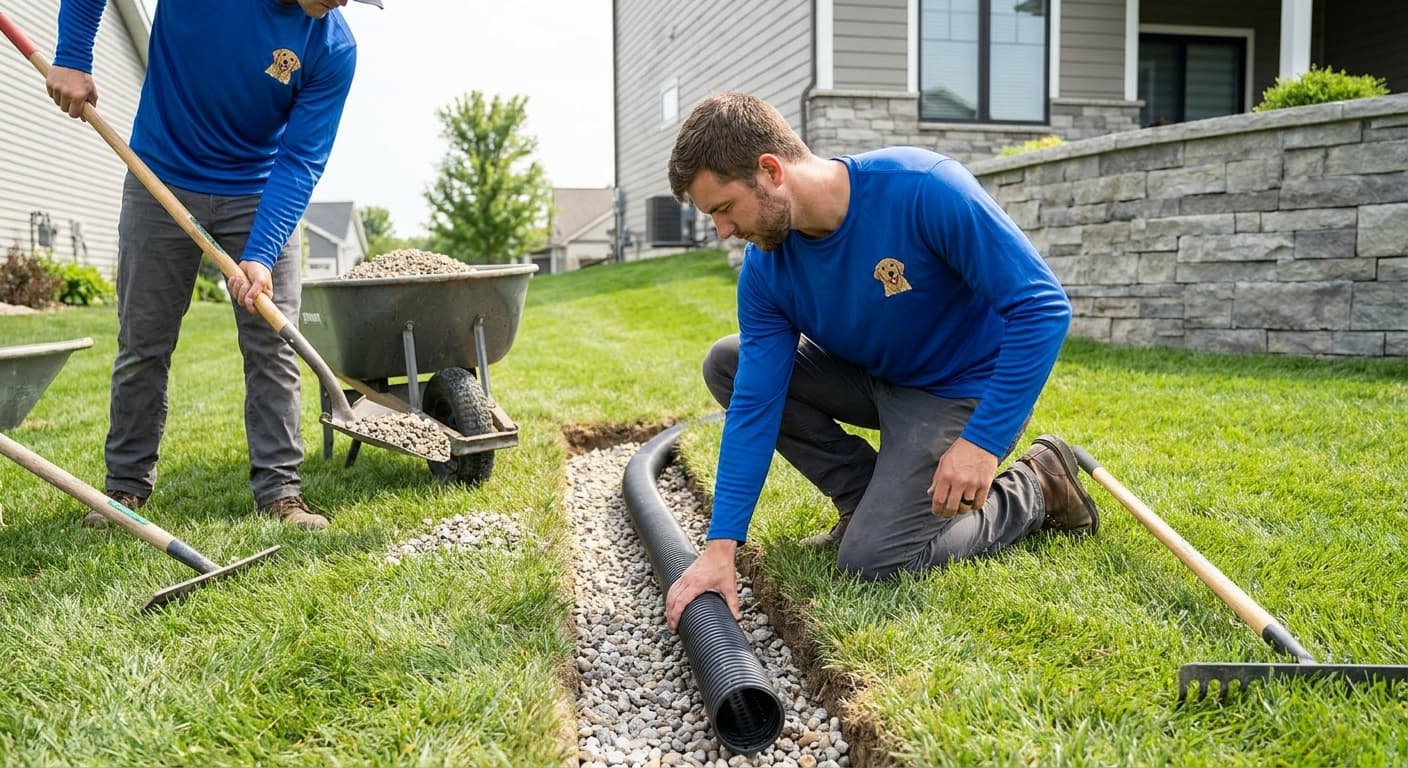
- Drainage built in — 1/8 inch per foot pitch and French drains where needed
- Segmental retaining walls with geogrid on anything over 30 inches
- Fire pits, outdoor kitchens, seat walls, and pillar caps
- Permit and engineered drawings on walls over 4 feet (San Antonio code)
- Five-year workmanship warranty on installation, manufacturer warranty on product
Materials & techniques
Pavers are Belgard, Pavestone, or Acker-Stone — 8,000+ psi compressive strength, freeze-thaw rated. Natural stone is Oklahoma flagstone, Lueders limestone, or Texas Cream for that San Antonio vernacular. Porcelain pavers (Belgard Dimensions or Techo-Bloc) are the new standard for high-end patios — 0% absorption, no sealing, and they stay cooler than concrete. Base is TXDOT Grade 5 crushed limestone, not pea gravel or river rock. Polymeric sand is Techniseal HP NextGel or Alliance G2 — calcium-chloride-free formulas that resist haze on darker pavers. Retaining walls are Belgard Celtik, Pavestone RockWall, or Keystone with Mirafi geogrid every other course on tiered or tall walls.
How the project runs
- 1
Design and material selection
Site walk, measurements, and conversation about how you actually use the space. We pull samples — Belgard, Pavestone, Acker-Stone, or natural stone — and lay them out at the site so you see color in real light.
- 2
Excavation and base prep
Dig to subgrade plus base depth plus paver thickness — usually 9-14 inches total. Geotextile fabric goes down, then crushed limestone in 2-inch lifts, each compacted with a 3,500+ lb plate compactor.
- 3
Edge and bedding
Aluminum edge restraint or concrete toe staked every 12 inches. One inch of washed concrete sand screeded flat with screed rails — never raked.
- 4
Laying and cutting
Pavers laid from a straight reference line, cut with a wet saw for clean edges. Pattern field, soldier course, and inlays set before final compaction.
- 5
Polymeric sand and seal
Pavers compacted with a rubber-mat plate to seat them in bedding. Polymeric sand swept in three directions, blown clean, then misted in stages so it activates without staining. Optional sealer 30+ days later once efflorescence clears.
Frequently asked questions
Why does base depth matter so much?
Subgrade clay in San Antonio expands and contracts dramatically with moisture. Insufficient base lets that movement telegraph through to the surface — pavers tilt, joints open, and water finds the failure. Six inches of compacted base for patios and ten inches for driveways is the floor, not the ceiling.
Polymeric sand or regular joint sand?
Polymeric every time. Regular sand washes out in the first heavy rain, invites weeds, and lets ants tunnel the bedding. Polymeric sand binds with moisture into a flexible mortar that locks pavers laterally while still allowing minor movement. It is the difference between a 5-year install and a 25-year install.
Do I need a permit for a patio or wall?
Patios at grade with no roof do not require a permit in most San Antonio jurisdictions. Retaining walls over 4 feet tall (measured from footing to top) require an engineered drawing and permit. Walls supporting a surcharge — driveway, pool, structure — require engineering at any height. We handle filing.
Can pavers handle vehicle weight?
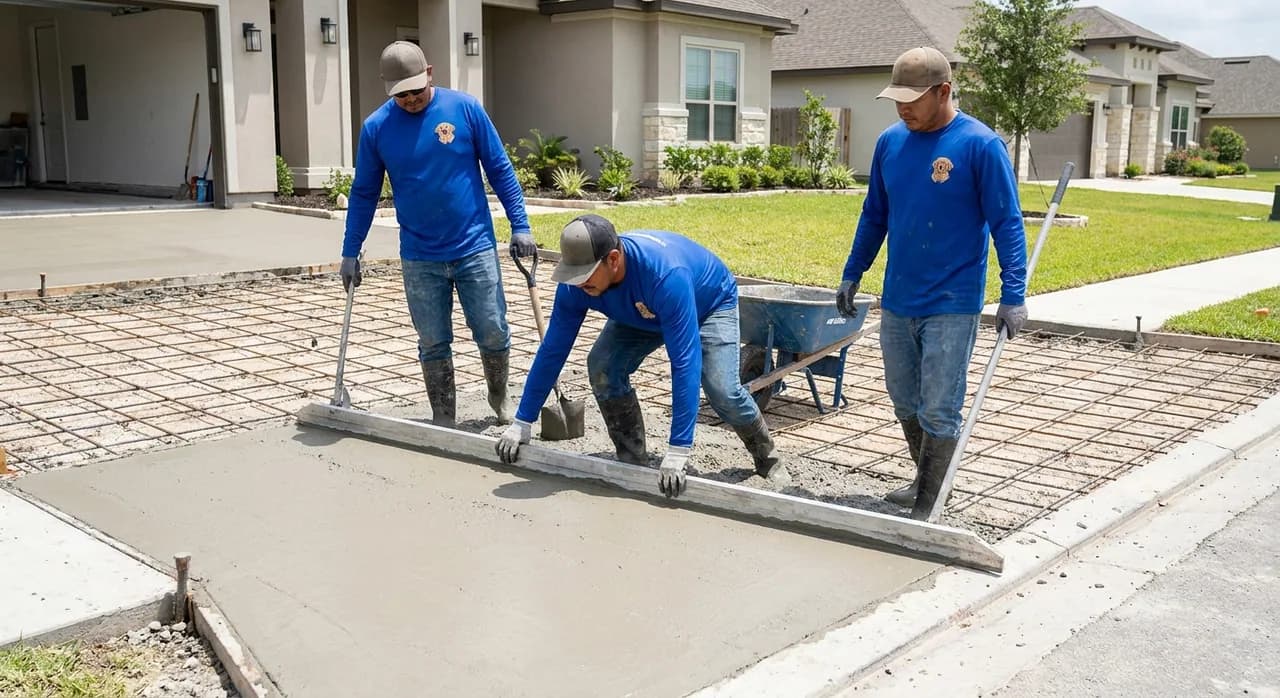
Yes, when designed for it. Driveway-rated pavers are 60mm or thicker on 10-12 inches of compacted base with geotextile. Pedestrian patios use 50mm or 60mm pavers on 6 inches of base. We do not install thin pavers on driveways — that is how you get hairline cracks within a year.
How do you handle drainage on a flat lot?
Every hardscape pitches a minimum 1/8 inch per foot away from structures. On flat lots or where pitch alone is not enough, we cut a French drain along the low side — 4-inch perforated pipe in gravel wrapped in geotextile, tied to daylight or a popup emitter. Water moves; it does not pond.
Why hire us for hardscape
In-house crew
Design, build, irrigation, and maintenance all run under one roof — no subbing out, no juggling vendors. You get one project manager from sketch through final walk-through.
San Antonio specialists
Built for South-Central Texas — heavy clay, caliche, long dry summers, and flash rain. Our designs and installs are tuned to what survives and looks good locally.
Clear pricing
No surprise line items. We size the work after a quick conversation or site visit and issue a written quote with materials and labor broken out so you can compare apples to apples.