Services
Stamped & Decorative Concrete
Decorative concrete patios, walkways, and pool decks — stamped, scored, stained, or sealed finishes that mimic flagstone, slate, or brick at a fraction of the price. Color hardener and release agent worked in at the pour so the look lasts.
Pricing varies by site. Final scope, materials, and access influence the all-in number — we'll quote your specific project after a quick conversation.
About our stamped & decorative concrete work
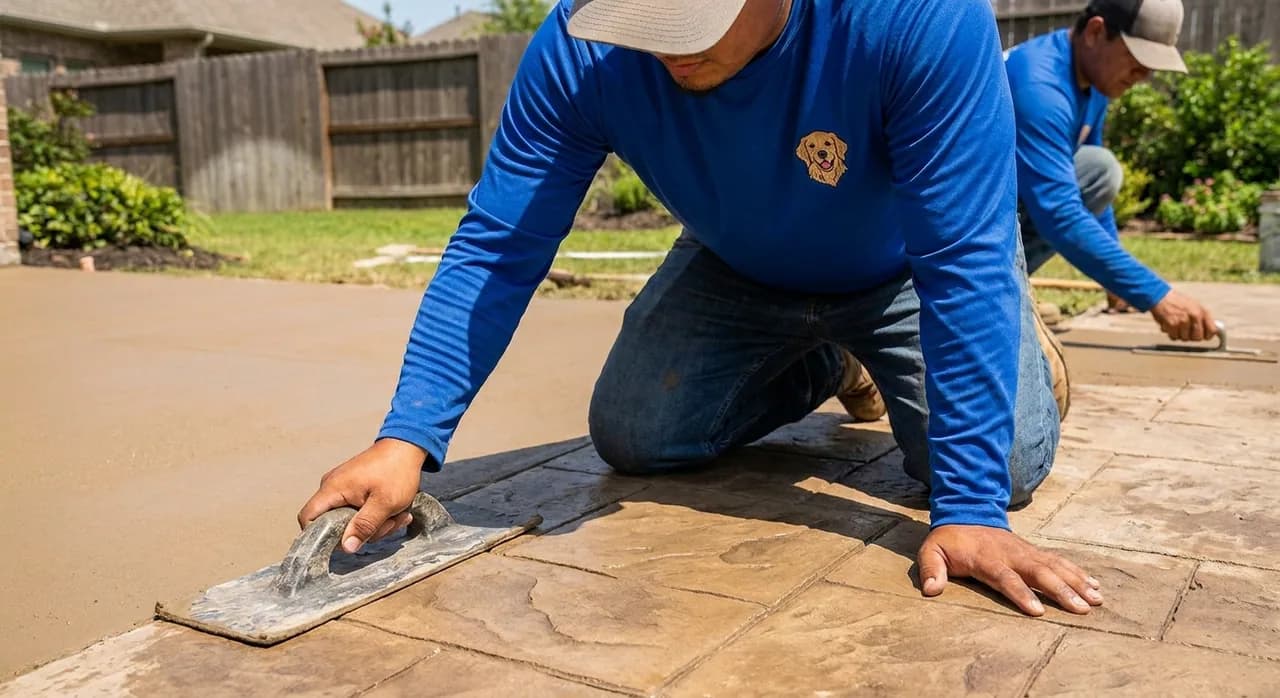
Stamped concrete delivers the look of flagstone, slate, cobblestone, or brick at roughly half the cost of natural stone — and with none of the joint settling that plagues paver installations on expansive Texas soil. The look comes from three integrated steps at the pour: color hardener broadcast and floated into the surface, powdered release agent dusted on, and polyurethane stamping mats pressed in while the concrete is at the right plastic stage (usually 60–90 minutes after pour, depending on mix and weather). Done right, the color is integral to the top 1/8 inch of the slab — not a coating that wears off. Done wrong, you get a slab that looks great for two years then turns into a faded, peeling mess. We pour stamped patios, pool decks, walkways, and entry approaches at 4-inch minimum over a compacted crushed base, with #4 rebar or fiber mesh reinforcement, proper control joints saw-cut within stamp lines, and a UV-stable acrylic sealer applied at 28 days. Pattern, color, and accent options are confirmed with physical samples on site before the pour.
What's included
- Pattern and color selection with physical sample boards
- Sub-grade prep and 4-inch crushed-limestone base
- Reinforcement with #4 rebar or fiber mesh
- Color hardener broadcast and floated into surface
- Release agent and stamp pattern application
- Saw-cut control joints hidden in stamp grout lines
- Pressure-wash and acrylic sealer at 28-day cure
- Optional accent color band and saw-cut detail work
Materials & techniques
We use Brickform, Butterfield, or Increte color systems — broadcast color hardener (2–3 lbs per sq ft) for the base color, antiquing release agent in a contrast tone, and polyurethane stamp mats in patterns from Tuscan slate to ashlar cut stone. Mix is 4000 PSI with fiber mesh added at the plant, or #4 rebar tied at 18 inches on grid for higher-traffic decks. Sealer is a UV-stable solvent-based acrylic at 25 percent solids — two thin coats roll-applied with cross-hatched cleated shoes worn during application to avoid lap marks. Re-seal every 2–3 years to maintain color depth.
How the project runs
- 1
Design and Sample Approval
We bring physical sample boards to the site — flagstone, slate, ashlar, herringbone brick, wood plank — and confirm base color, accent color, and pattern orientation against your home's stone, brick, and trim.
- 2
Base and Forming
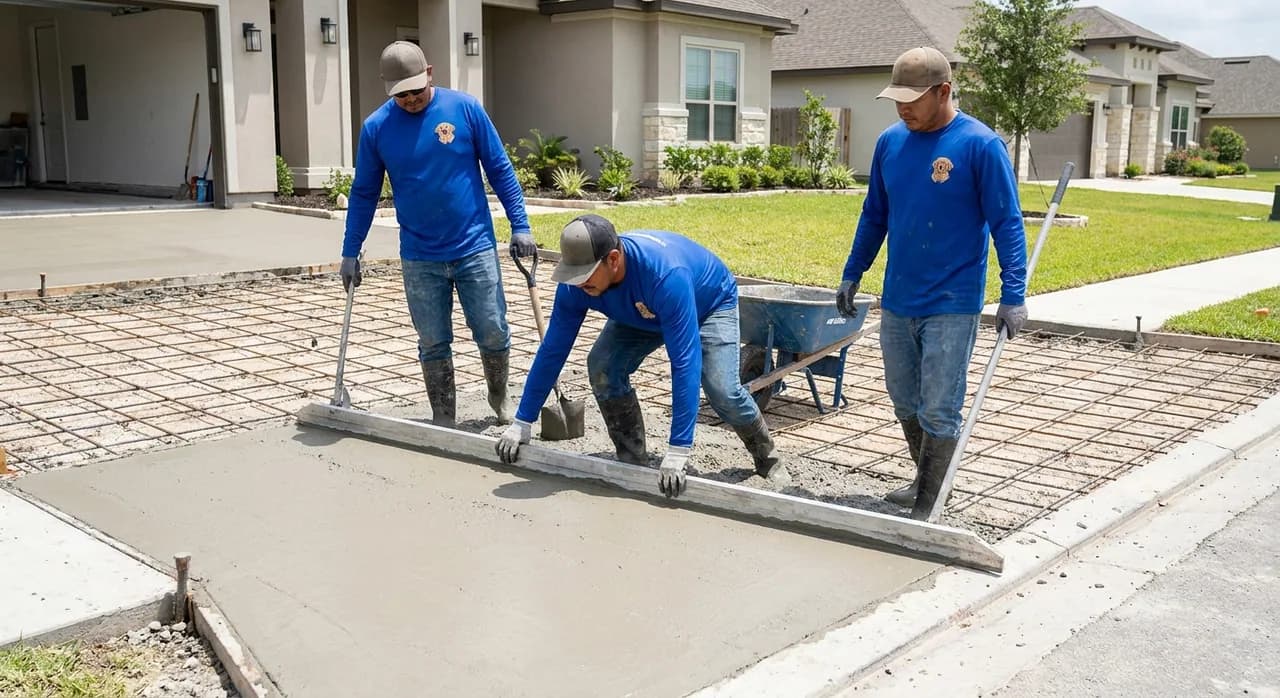
Sub-grade is stripped and compacted, a 4-inch crushed-limestone base is placed and compacted to grade, forms are set with proper slope away from structures (1/4 inch per foot minimum), and rebar or mesh is tied in.
- 3
Pour and Color
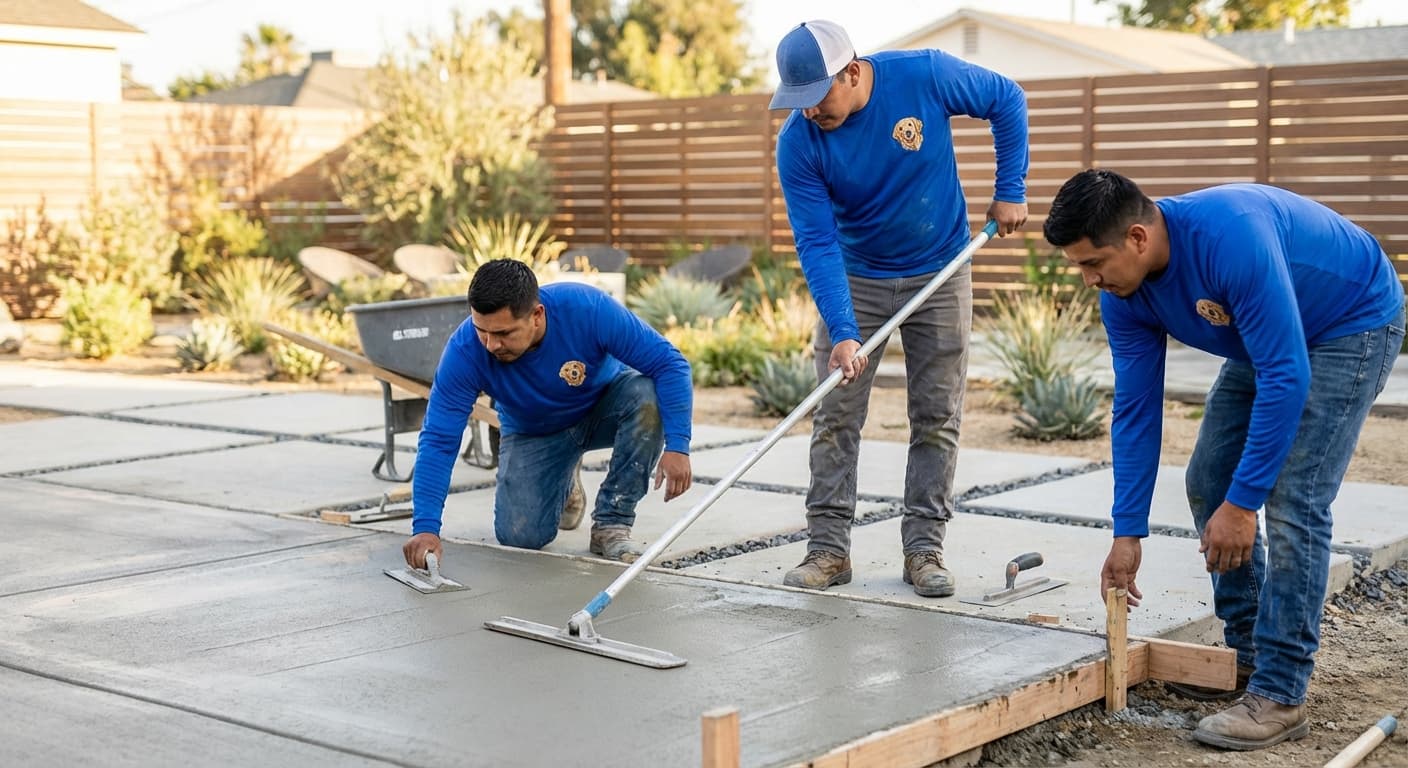
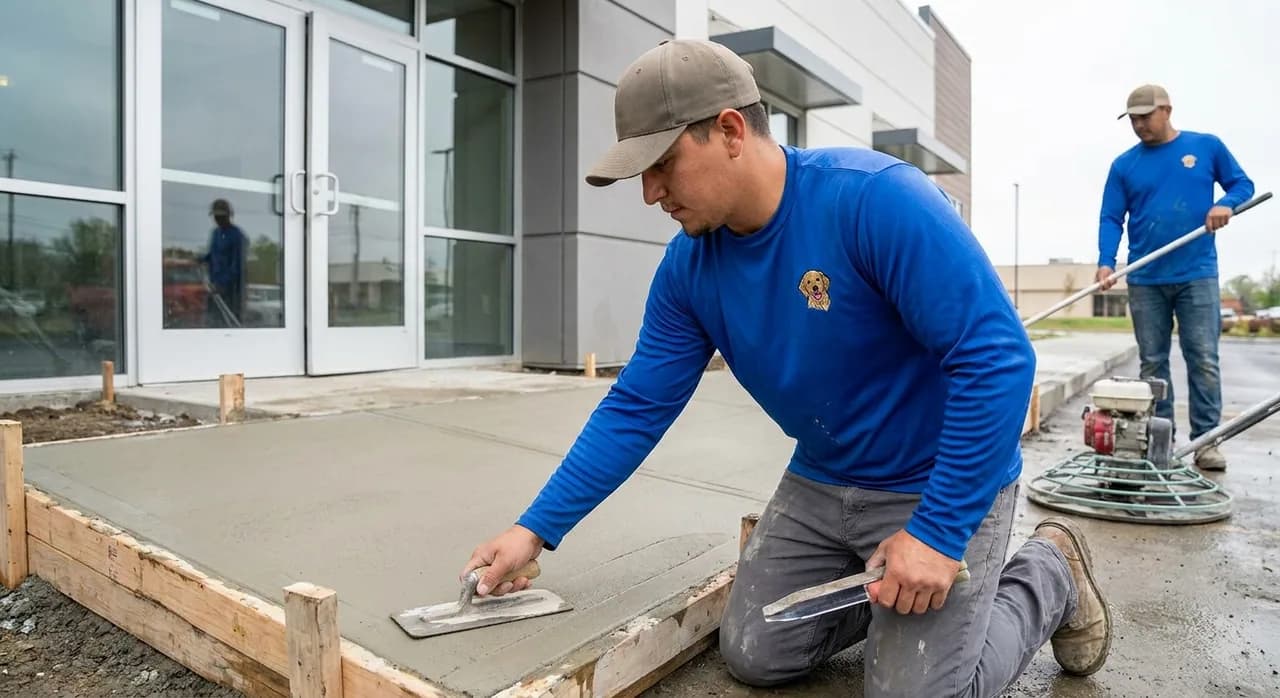
4000 PSI concrete is placed, screeded, and floated. Color hardener is broadcast in two passes and worked in with a magnesium float until fully hydrated and integral to the surface.
- 4
Release and Stamp
Powdered release agent is dusted across the slab in the chosen accent color. Stamps are laid in pattern and tamped firm while the slab is at the correct plastic stage — typically 60–90 minutes after pour.
- 5
Cure, Wash, and Seal
Slab cures 28 days. We return to pressure-wash off residual release agent, saw-cut any remaining joints, and roll on two coats of UV-stable acrylic sealer with non-slip additive in walking areas.
Frequently asked questions
Will the color fade?
Integral color hardener resists fade because it's locked into the top 1/8 inch of cement paste — not painted on. UV exposure does soften the surface tone over 5–10 years. Re-sealing every 2–3 years with UV-stable acrylic keeps the color saturated and the surface protected.
Is stamped concrete slippery when wet?
Raw stamped concrete has texture from the stamp itself, which provides decent grip. Sealed surfaces can get slick — we add a fine-grit polymer non-slip additive (Shark Grip or equivalent) to the sealer on pool decks, walkways, and any surface that sees regular wet use.
Can stamped concrete go around a pool?
Yes — it's a common pool-deck application. We pour at 4 inches with rebar, slope minimum 1/4 inch per foot away from the coping, use a cool-deck color (light gray, sand, or buff) to reduce heat-soak, and add non-slip additive in the sealer.
How does the cost compare to pavers or flagstone?
Stamped concrete typically runs 30–50 percent less than natural flagstone installed, and 15–25 percent less than concrete pavers. You save more long-term because there are no joints to re-sand and no settling to chase every few years.
Can you stamp over my existing concrete?
Not with traditional stamps — those require fresh plastic concrete. Existing slabs can be resurfaced with a stampable polymer-modified overlay (1/4–3/8 inch thick) that achieves a similar look. We assess the existing slab condition before recommending that approach.
Why hire us for stamped & decorative concrete
In-house crew
Design, build, irrigation, and maintenance all run under one roof — no subbing out, no juggling vendors. You get one project manager from sketch through final walk-through.
San Antonio specialists
Built for South-Central Texas — heavy clay, caliche, long dry summers, and flash rain. Our designs and installs are tuned to what survives and looks good locally.
Clear pricing
No surprise line items. We size the work after a quick conversation or site visit and issue a written quote with materials and labor broken out so you can compare apples to apples.