
Insight
St. Augustine vs. Bermuda vs. Zoysia: Choosing the Right Grass for Your San Antonio Yard
Picking a lawn grass in San Antonio isn't really about which one looks best on a sod farm pallet. It's about how much sun your yard gets, what's under the topsoil, how hard the lawn gets used, and how much water you can count on under SAWS rules. Pick the wrong grass for the site and no amount of fertilizer or watering will fix it.
The three warm-season grasses that make sense for most San Antonio yards are St. Augustine, Bermuda, and Zoysia. Here's how they actually compare, and how to choose.
The short answer
- Mostly shade from mature live oaks? St. Augustine (a shade-tolerant variety like Palmetto).
- Full sun, kids, dogs, and heavy foot traffic? Bermuda (Tifway 419 or similar).
- Full to partial sun and you want a dense, fine-textured lawn that holds up in drought once established? Zoysia (such as Empire).
If your yard has a mix, it's common to use different grasses in different areas, or to switch the darkest spots to beds or hardscape instead of fighting for turf.
Start with sunlight, not looks
Sunlight is the deciding factor more often than anything else. Before you pick a grass, watch the yard on a summer day and note how many hours of direct sun each area gets.
- Bermuda needs full sun. Under a live oak canopy it thins out and lets weeds in.
- Zoysia tolerates some shade, more or less depending on the variety, but it's happiest with at least a half day of sun.
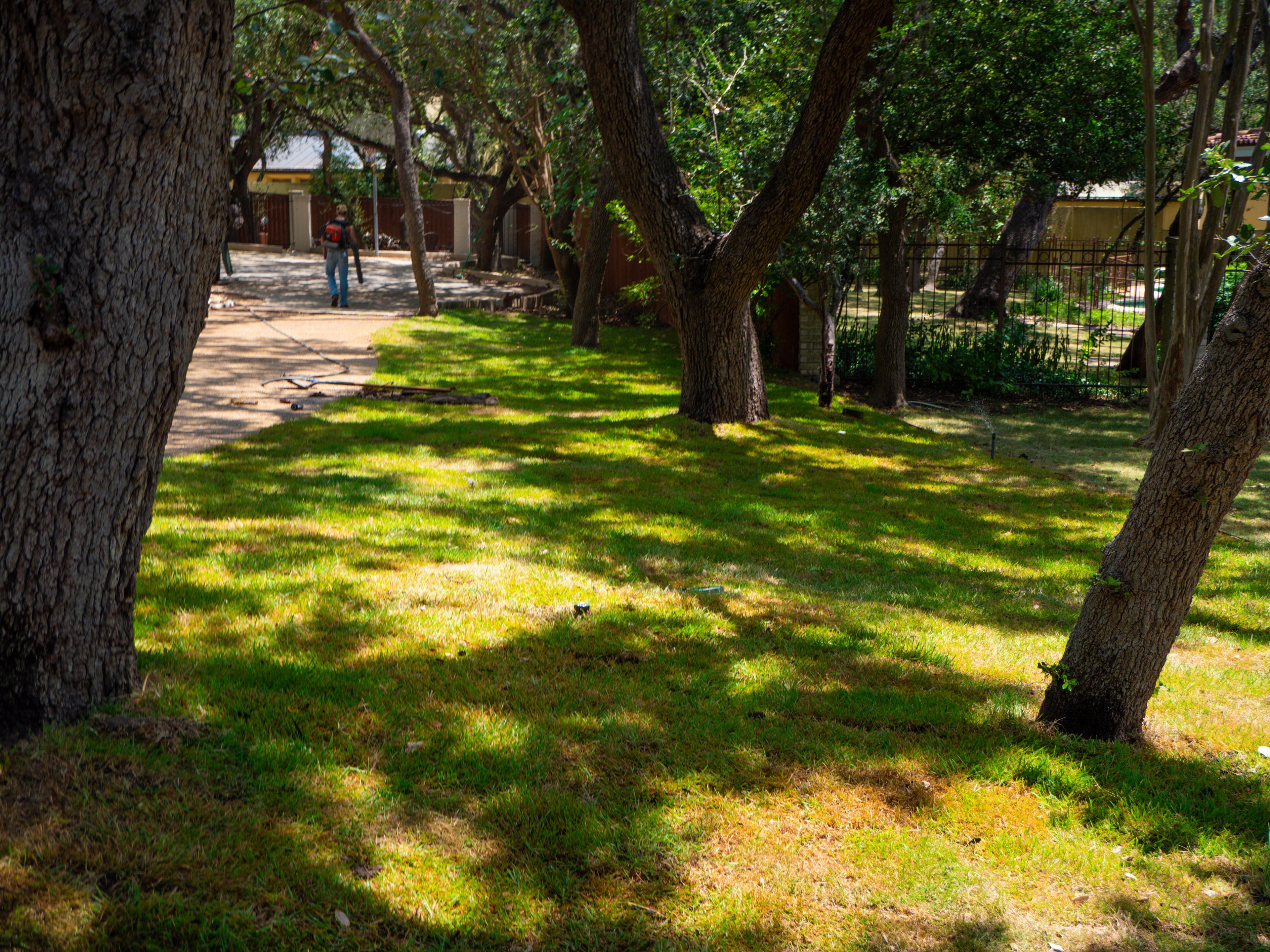
- St. Augustine is the most shade-tolerant warm-season turf we install, which is why it's the default under so many San Antonio trees.
There's a limit, though. On our sod installation projects, anything under about 4 hours of direct sun is too dark for sod. That spot is better as a mulch bed, groundcover, or a patio than another round of dying grass.
St. Augustine: the shade-tolerant standard
St. Augustine has wide, coarse blades and spreads by above-ground runners. It's the lawn most people picture when they think of a San Antonio front yard.
Where it works
- Yards with mature trees and partial shade
- Homeowners who want a lush, thick look
- Clay soils, especially with newer varieties
What to know
- Variety matters. Palmetto handles partial shade and clay better than older Floratam. Raleigh is the most cold-hardy St. Augustine, a good pick for North Side yards that see frost.
- Mow it tall. St. Augustine likes 2.5 to 4 inches so it shades its own roots. Our San Antonio mowing schedule covers heights for all three grasses.
- Watch for pests and disease. Chinch bugs in hot, sunny spots and fungal problems like large patch during cool, wet stretches are the usual troublemakers. Overwatering and night watering make fungus worse.
- It's sold as sod or plugs, not seed. If you want St. Augustine, you're laying sod.
Bermuda: built for sun and traffic
Bermuda is fine-bladed, fast-growing, and tough. It's the grass on most athletic fields for a reason.
Where it works
- Open, full-sun yards with no big trees
- Families with dogs and active kids
- Commercial properties and common areas that take a beating
What to know
- It recovers fast. Bermuda spreads by both above- and below-ground runners, so worn spots fill back in quickly in the growing season.
- It handles drought by going dormant. It browns out under stress and greens back up when water returns, which suits a city that spends a lot of time in watering restrictions.
- It's aggressive. Those runners will creep into flower beds and cracks in hardscape. Solid bed edging and regular edging save a lot of weeding.
- It wants a short, frequent cut. Around 1 to 2 inches, mowed often in peak season.
- No shade. Bermuda under trees will thin out every year.
Zoysia: dense, fine, and slow
Zoysia makes a thick, carpet-like lawn that feels great underfoot. It sits between St. Augustine and Bermuda on most traits.
Where it works
- Full-sun to partly shaded yards
- Homeowners who want a high-end look and are patient
- Yards where water is tight and the lawn is past establishment
What to know
- It's slow to fill in. That's why we lay sod rather than wait on seed or plugs. Once established, the density helps crowd out weeds.
- Deep roots, good drought tolerance once established. Empire Zoysia, which we install, is a medium-bladed variety with deep roots.
- It builds thatch. Thick lawns build up a layer of dead material over time. Keeping it mowed at a steady height (about 1.5 to 3 inches) and not overfeeding helps.
- Slow recovery from damage. The same slow growth that makes it low-mow means divots and dog spots take longer to heal than in Bermuda.
Side-by-side comparison
| | St. Augustine | Bermuda | Zoysia | |---|---|---|---| | Sun needs | Partial shade to full sun | Full sun only | Full sun to light shade | | Foot traffic | Moderate | High | Moderate to high | | Recovery from wear | Moderate | Fast | Slow | | Texture | Coarse, wide blade | Fine | Fine to medium, dense | | Mowing height | 2.5 to 4 in. | 1 to 2 in. | 1.5 to 3 in. | | Common issues | Chinch bugs, fungus | Creeps into beds | Thatch, slow fill-in |
San Antonio soil and water: the part people skip
The grass is only as good as what it's laid on. A lot of San Antonio yards sit on heavy clay or caliche, and a lot of new-construction lots have only a thin layer of topsoil over fill.
Before any sod goes down, we strip old turf and weeds, till to break up compaction, work compost and starter fertilizer into the top few inches, and check the grade so water moves away from the house. If water already sits in your yard after a rain, fix that first. Our post on signs your yard needs regrading or drainage work and our grading service explain why.
Water is the other constraint. New sod still has to follow your water provider's rules, and new sod does not automatically qualify for a SAWS watering variance. Plan establishment watering with the grass, the season, and current restrictions in mind. If you're on SAWS, our guide to setting your sprinklers under Stage 2 this winter walks through it, and a well-tuned irrigation system from licensed irrigators puts the water where the roots actually are.
Timing your install
All three grasses are warm-season grasses that go dormant in winter. Spring and early fall give the roots the best start, and summer installs can work with careful watering. Winter sod goes down dormant and won't root deeply until spring. Our full breakdown is in the best time to install sod in San Antonio.
When grass isn't the answer
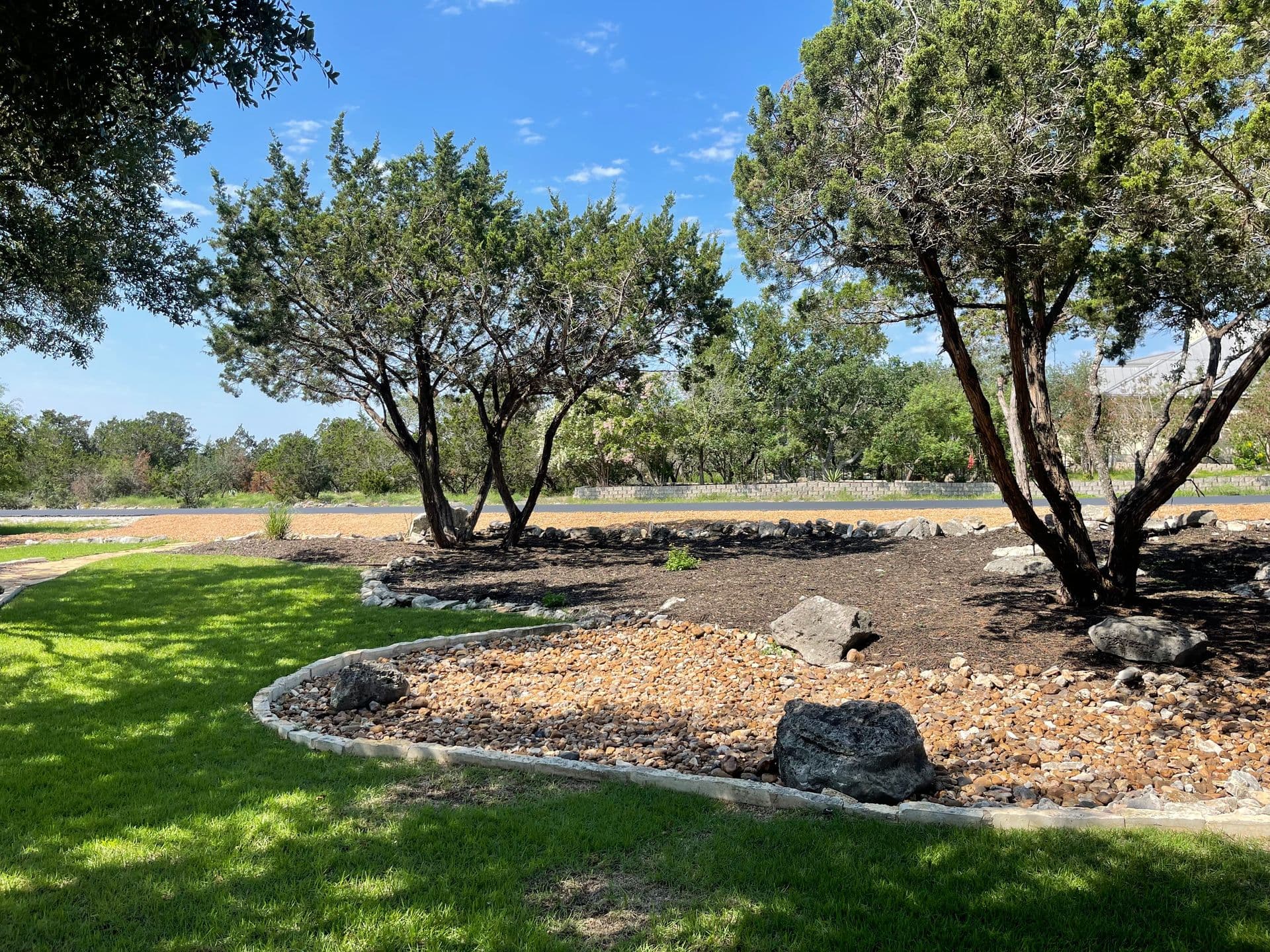
Sometimes the honest recommendation is less lawn. Deep shade, steep slopes, narrow side yards, and spots the sprinklers can't reach rarely hold good turf. Native beds, rock, or a xeriscape design can cut water use and maintenance. For play areas or dog runs where nothing survives, artificial turf is another option.
FAQ
What is the best grass for shade in San Antonio?
St. Augustine, specifically a shade-tolerant variety like Palmetto. If an area gets under about 4 hours of direct sun, it's usually better as a bed or hardscape than as turf.
Which grass uses the least water?
Bermuda and established Zoysia both handle drought well. Bermuda goes dormant and bounces back, and Zoysia's deep roots help once it's established. St. Augustine generally needs more consistent water to stay green.
Can I mix St. Augustine and Bermuda in the same yard?
You can use each where it fits, such as St. Augustine under the trees and Bermuda in open sun, but they'll creep into each other over time. A sidewalk, bed, or edging between them helps keep them separated.
Can you lay sod in winter in San Antonio?
Yes, but it goes in dormant and won't root deeply until the soil warms in spring. It also needs protection from drying out during dry cold snaps.
Do you install all three grasses?
Yes. We install St. Augustine, Zoysia, and Bermuda, including soil prep, grading, and a watering plan for establishment.
Not sure which grass fits your yard?
We'll walk the property, check sun, soil, and drainage, and recommend the grass that will actually hold up. Contact us, call 218-595-7370, or email book@canopylandsolutions.com.
Related services
Sod Installation
Fresh sod installs in St. Augustine, Zoysia, or Bermuda — soil prep, leveling, lay, and roll for full seam contact. We schedule cut-and-place same day so blades arrive green and root in fast. A 14-day watering plan included with every install.
See pricing & details →Hardscape
Pavers, flagstone, and natural stone — patios, walkways, retaining walls, fire pits, and outdoor kitchens. Engineered base, polymeric sand, and proper drainage built into every install. Outdoor living spaces that hold up to Texas heat and feel premium underfoot.
See pricing & details →Irrigation
Sprinkler installs, repairs, and seasonal tune-ups by licensed irrigators. Smart controllers, drip lines for beds, pressure-regulated rotor heads, and rain sensors that meet SAWS rebate guidelines. Honest coverage audits so you water plants — not the sidewalk.
See pricing & details →More insights
SAWS Stage 2 Is Back: How to Set Your San Antonio Sprinklers for Winter
San Antonio moved to SAWS Stage 2 watering rules on Nov. 23, 2026. Here's your watering day, allowed hours, how to set your controller for winter, and how to protect your irrigation system before a freeze.
11/23/2026How to Build a Flagstone Walkway with Paver Edging
Combine the organic beauty of flagstone with the structural integrity of pavers. Learn how to install a durable walkway suited for San Antonio's unique soil conditions.
12/22/2025Is Your Yard Drowning? 5 Signs You Need Regrading or Drainage Work
Ignore standing water at your own risk. Learn the warning signs that your property needs professional drainage correction to protect your foundation and landscape.
12/19/2025